Bertrand Russell
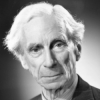
Bertrand Russell
Bertrand Arthur William Russell, 3rd Earl Russell, OM, FRSwas a British philosopher, logician, mathematician, historian, writer, social critic, political activist and Nobel laureate. At various points in his life he considered himself a liberal, a socialist, and a pacifist, but he also admitted that he had "never been any of these things, in any profound sense". He was born in Monmouthshire into one of the most prominent aristocratic families in the United Kingdom...
NationalityBritish
ProfessionPhilosopher
Date of Birth18 May 1872
There is in Aristotle an almost complete absence of what may be called benevolence or philanthropy. The sufferings of mankind . . . there is no evidence that they cause him unhappiness except when the sufferers happen to be his friends.
A habit of basing convictions upon evidence, and of giving to them only that degree or certainty which the evidence warrants, would, if it became general, cure most of the ills from which the world suffers.
In the part of this universe that we know there is great injustice, and often the good suffer, and often the wicked prosper, and one hardly knows which of those is the more annoying.
All who are not lunatics are agreed about certain things. That it is better to be alive than dead, better to be adequately fed than starved, better to be free than a slave. Many people desire those things only for themselves and their friends; they are quite content that their enemies should suffer. These people can only be refuted by science: Humankind has become so much one family that we cannot ensure our own prosperity except by ensuring that of everyone else. If you wish to be happy yourself, you must resign yourself to seeing others also happy.
[The church] is in its major part an opponent still of progress and improvement in all the ways that diminish suffering in the world, because it has chosen to label as morality a certain narrow set of rules of conduct which have nothing to do with human happiness; and when you say that this or that ought to be done because it would make for human happiness, they think that has nothing to do with the matter at all. "What has human happiness to do with morals? The object of morals is not to make people happy.
It is preoccupation with possession, more than anything else, that prevents men from living freely and nobly
It is not by prayer and humility that you cause things to go as you wish, but by acquiring a knowledge of natural laws
Religion is based, I think, primarily and mainly upon fear. It is partly the terror of the unknown and partly, as I have said, the wish to feel that you have a kind of elder brother who will stand by you in all your troubles and disputes....A good world needs knowledge, kindliness, and courage; it does not need a regretful hankering after the past or a fettering of the free intelligence by the words uttered long ago by ignorant men.
Reason is a harmonizing, controlling force rather than a creative one.
Male superiority in former days was easily demonstrated, because if a woman questioned her husband's he could beat her. From superiority in this respect others were thought to follow. Men were more reasonable than women, more inventive, less swayed b
Some kind of philosophy is a necessity to all but the most thoughtless, and in the absence of knowledge it is almost sure to be a silly philosophy.
Ignore fact and reason, live entirely in the world of your own fantastic and myth-producing passions; do this whole-heartedly and with conviction, and you will become one of the prophets of your age.
Orthodoxy is the grave of intelligence, no matter what orthodoxy it may be.
As soon as it is held that any belief, no matter what, is important for some other reason than that it is true, a whole host of evils is ready to spring up.