Bertrand Russell
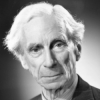
Bertrand Russell
Bertrand Arthur William Russell, 3rd Earl Russell, OM, FRSwas a British philosopher, logician, mathematician, historian, writer, social critic, political activist and Nobel laureate. At various points in his life he considered himself a liberal, a socialist, and a pacifist, but he also admitted that he had "never been any of these things, in any profound sense". He was born in Monmouthshire into one of the most prominent aristocratic families in the United Kingdom...
NationalityBritish
ProfessionPhilosopher
Date of Birth18 May 1872
Skilled work, of no matter what kind, is only done well by those who take a certain pleasure in it, quite apart from its utility, either to themselves in earning a living, or to the world through its outcome.
One's work is never so bad as it appears on bad days, nor so good as it appears on good days.
The road to happiness and prosperity lies in an organized diminution of work.
The morality of work is the morality of slaves, and the modern world has no need of slavery.
A large proportion of the human race, it is true, is obliged to work so hard in obtaining the necessaries that little energy is left over for the other purposes; but those whose livelihood is assured do not, on that account, cease to be active
Continuity of purpose is one of the most essential ingredients of happiness in the long run, and for most men that comes chiefly through their work.
One of the symptoms of approaching nervous breakdown is the belief that one's work is terribly important, and that to take a holiday would bring all kinds of disaster. If I were a medical man, I should prescribe a holiday to any patient who considered his or her work important.
One of the symptoms of an approaching nervous breakdown is the belief that one's work is terribly important.
It is preoccupation with possession, more than anything else, that prevents men from living freely and nobly
It is not by prayer and humility that you cause things to go as you wish, but by acquiring a knowledge of natural laws
Religion is based, I think, primarily and mainly upon fear. It is partly the terror of the unknown and partly, as I have said, the wish to feel that you have a kind of elder brother who will stand by you in all your troubles and disputes....A good world needs knowledge, kindliness, and courage; it does not need a regretful hankering after the past or a fettering of the free intelligence by the words uttered long ago by ignorant men.
Reason is a harmonizing, controlling force rather than a creative one.
Male superiority in former days was easily demonstrated, because if a woman questioned her husband's he could beat her. From superiority in this respect others were thought to follow. Men were more reasonable than women, more inventive, less swayed b
Some kind of philosophy is a necessity to all but the most thoughtless, and in the absence of knowledge it is almost sure to be a silly philosophy.