Billy Collins
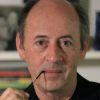
Billy Collins
William James "Billy" Collinsis an American poet, appointed as Poet Laureate of the United States from 2001 to 2003. He is a Distinguished Professor at Lehman College of the City University of New York and is the Senior Distinguished Fellow of the Winter Park Institute, Florida. Collins was recognized as a Literary Lion of the New York Public Libraryand selected as the New York State Poet for 2004 through 2006. He isa teacher in the MFA program at Stony Brook...
NationalityAmerican
ProfessionPoet
Date of Birth22 March 1941
CityNew York City, NY
CountryUnited States of America
I think more people should be reading it but maybe fewer people should be writing it, ... there's an abundance of unreadable poetry out there.
My poems tend to have rhetorical structures; what I mean by that is they tend to have a beginning, a middle, and an end. There tends to be an opening, as if you were reading the opening chapter of a novel. They sound like I'm initiating something, or I'm making a move.
I see all of us reading ourselves away from ourselves, straining in circles of light to find more light until the line of words becomes a trail of crumbs that we follow across a page of fresh snow...
Some difficulty is warranted and other difficulty I think is gratuitous. And I think I can tell the difference. There are certainly very difficult poets that I really enjoy reading.
I just think that the world of workshops - I've written a poem that is a parody of workshop talk, I've written a poem that is a kind of parody of a garrulous poet at a poetry reading who spends an inordinate amount of time explaining the poem before reading it, I've written a number of satirical poems about other poets.
Robert Frost really started this whole thing rolling. He was, I believe, the first poet who started going to colleges. Before that, poets didn't give public readings very often, certainly not - there was no circuit of schools.
Now I would say at any given moment in American life, there are probably 45 poets in airplanes vectoring across the country heading towards...I don't know if anyone's reading it, but poets are still flying around the country going from lectern to lectern.That circuitry has become very well-established.
I started moving away from poets like Wallace Stevens and Hart Crane and started reading poets like, again, Karl Shapiro, Howard Nemerov, Philip Larkin, and the British poets who were imported through that important anthology put together by Alvarez - and those would include Thom Gunn and Ted Hughes. And I think these poets gave me assurance that there were other ways to write besides the rather involuted style of high modernism whose high priests were Pound, Eliot and Stevens, and Crane perhaps.
Particularly when I thought of myself as a Wallace Stevens acolyte, I wrote very difficult poetry and I was really guilty of not knowing what I was talking about. I was going for a kind of clever verbal effect. I was trying to sound linguistically or verbally interesting. I had a sense, I guess, from just reading a lot of poetry of how a poem would start and how it would end but really I didn't know what I was doing. It had very little connection to my life.
I first came across 'The Lake Isle of Innisfree' in college, with other anthologized poems by Yeats.
Humor, for me, is really a gate of departure. It's a way of enticing a reader into a poem so that less funny things can take place later. It really is not an end in itself, but a means to an end.
I'm a great believer in poetry out of the classroom, in public places, on subways, trains, on cocktail napkins. I'd rather have my poems on the subway than around the seminar table at an MFA program.
Emily Dickinson never developed. She remained loyal to her persona and to that same little metrical song that stood her in such good stead. She is a striking example of complexity within a simple package. Her rhymes are like bows on the package.
Discovering Samuel Beckett in college was a big deal for me. I realized you could be very funny and very dark at the same time.