Blaise Pascal
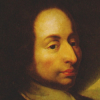
Blaise Pascal
Blaise Pascalwas a French mathematician, physicist, inventor, writer and Christian philosopher. He was a child prodigy who was educated by his father, a tax collector in Rouen. Pascal's earliest work was in the natural and applied sciences where he made important contributions to the study of fluids, and clarified the concepts of pressure and vacuum by generalising the work of Evangelista Torricelli. Pascal also wrote in defence of the scientific method...
NationalityFrench
ProfessionPhilosopher
Date of Birth19 June 1623
CityClermont-Ferrand, France
CountryFrance
If magistrates had true justice, and if physicians had the true art of healing, they would have no occasion for square caps; the majesty of these sciences would itself be venerable enough.
The art of revolutionizing and overturning states is to undermine established customs, by going back to their origin, in order to mark their want of justice.
All who say the same things do not possess them in the same manner; and hence the incomparable author of the Art of Conversation pauses with so much care to make it understood that we must not judge of the capacity of a man by the excellence of a happy remark that we heard him make. ...let us penetrate, says he, the mind from which it proceeds... it will oftenest be seen that he will be made to disavow it on the spot, and will be drawn very far from this better thought in which he does not believe, to plunge himself into another, quite base and ridiculous.
A few rules include all that is necessary for the perfection of the definitions, the axioms, and the demonstrations, and consequently of the entire method of the geometrical proofs of the art of persuading.
The art of subversion, of revolution, is to dislodge established customs by probing down to their origins in order to show how they lack authority and justice.
Nature has made all her truths independent of one another. Our art makes one dependent on the other. But this is not natural. Each keeps its own place.
Making fun of philosophy is really philosophising.
Chance gives rise to thoughts, and chance removes them; no art can keep or acquire them.
Nature diversifies and imitates; art imitates and diversifies.
Reason's last step is the recognition that there are an infinite number of things which are beyond it
Who would desire to have for a friend a man who talks in this fashion? Who would choose him out from others to tell him of his affairs? Who would have recourse to him in affliction? And indeed to what use in life could one put him?
Kind words produce their images on men's souls.
Man's greatness lies in his power of thought.
Thus we never live, but we hope to live; and always disposing ourselves to be happy, it is inevitable that we never become so.