Blaise Pascal
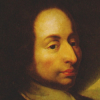
Blaise Pascal
Blaise Pascalwas a French mathematician, physicist, inventor, writer and Christian philosopher. He was a child prodigy who was educated by his father, a tax collector in Rouen. Pascal's earliest work was in the natural and applied sciences where he made important contributions to the study of fluids, and clarified the concepts of pressure and vacuum by generalising the work of Evangelista Torricelli. Pascal also wrote in defence of the scientific method...
NationalityFrench
ProfessionPhilosopher
Date of Birth19 June 1623
CityClermont-Ferrand, France
CountryFrance
Continuous eloquence is tedious.
True eloquence scorns eloquence.
Continued eloquence is wearisome.
Eloquence is the painting of thought ...
True eloquence makes light of eloquence. True morality makes light of morality.
Eloquence; it requires the pleasant and the real; but the pleasant must itself be drawn from the true.
Eloquence is a painting of the thoughts.
Continuous eloquence wearies.
Reason's last step is the recognition that there are an infinite number of things which are beyond it
Who would desire to have for a friend a man who talks in this fashion? Who would choose him out from others to tell him of his affairs? Who would have recourse to him in affliction? And indeed to what use in life could one put him?
Kind words produce their images on men's souls.
Man's greatness lies in his power of thought.
Thus we never live, but we hope to live; and always disposing ourselves to be happy, it is inevitable that we never become so.
Thus our first interest and our first duty is to enlighten ourselves on this subject, whereon depends all our conduct. Therefore among those who do not believe, I make a vast difference between those who strive with all their power to inform themselv