Blaise Pascal
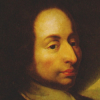
Blaise Pascal
Blaise Pascalwas a French mathematician, physicist, inventor, writer and Christian philosopher. He was a child prodigy who was educated by his father, a tax collector in Rouen. Pascal's earliest work was in the natural and applied sciences where he made important contributions to the study of fluids, and clarified the concepts of pressure and vacuum by generalising the work of Evangelista Torricelli. Pascal also wrote in defence of the scientific method...
NationalityFrench
ProfessionPhilosopher
Date of Birth19 June 1623
CityClermont-Ferrand, France
CountryFrance
If we regulate our conduct according to our own convictions, we may safely disregard the praise or censure of others.
The incredulous are the more credulous. They believe the miracles of Vespasian that they may not believe those of Moses. [Fr., Incredules les plus credules. Ils croient les miracle de Vespasien, pour ne pas croire ceux de Moise.]
Continuous eloquence wearies. Grandeur must be abandoned to be appreciated. Continuity in everything is unpleasant. Cold is agreeable, that we may get warm.
Put the world's greatest philosopher on a plank that is wider than need be; if there is a precipe below, although his reason may convince him that he is safe, his imagination will prevail.
May God never abandon me.
Orthodoxy on one side of the Pyrenees may be heresy on the other.
That a religion may be true, it must have knowledge of our nature.
It is good to be tired and wearied by the futile search after the true good, that we may stretch out our arms to the Redeemer.
He that takes truth for his guide, and duty for his end, may safely trust to God's providence to lead him aright.
We implore the mercy of God, not that He may leave us at peace in our vices, but that He may deliver us from them.
Reason's last step is the recognition that there are an infinite number of things which are beyond it
Who would desire to have for a friend a man who talks in this fashion? Who would choose him out from others to tell him of his affairs? Who would have recourse to him in affliction? And indeed to what use in life could one put him?
Kind words produce their images on men's souls.
Man's greatness lies in his power of thought.