Blaise Pascal
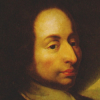
Blaise Pascal
Blaise Pascalwas a French mathematician, physicist, inventor, writer and Christian philosopher. He was a child prodigy who was educated by his father, a tax collector in Rouen. Pascal's earliest work was in the natural and applied sciences where he made important contributions to the study of fluids, and clarified the concepts of pressure and vacuum by generalising the work of Evangelista Torricelli. Pascal also wrote in defence of the scientific method...
NationalityFrench
ProfessionPhilosopher
Date of Birth19 June 1623
CityClermont-Ferrand, France
CountryFrance
Civil wars are the greatest of evils. They are inevitable, if we wish to reward merit, for all will say that they are meritorious.
The war existing between the senses and reason.
We must kill them in war, just because they live beyond the river. If they lived on this side, we would be called murderers.
On the occasions when I have pondered over men's various activities, the dangers and worries they are exposed to at court or at war, from which so many quarrels, passions, risky, often ill-conceived actions and so on are born, I have often said that man's unhappiness springs from one thing alone, his incapacity to stay quietly in one room. A man wealthy enough for life's needs would never leave home to go to sea or beseige some fortress if he knew how to stay at home and enjoy it...
All men seek happiness. This is without exception. Whatever different means they employ, they all tend to this end. The cause of some going to war, and of others avoiding it, is the same desire in both, attended with different views. The will never takes the least step but to this object. This is the motive of every action of every man, even of those who hang themselves.
The most powerful cause of error is the war existing between the senses and reason
Reason's last step is the recognition that there are an infinite number of things which are beyond it
Who would desire to have for a friend a man who talks in this fashion? Who would choose him out from others to tell him of his affairs? Who would have recourse to him in affliction? And indeed to what use in life could one put him?
Kind words produce their images on men's souls.
Man's greatness lies in his power of thought.
Thus we never live, but we hope to live; and always disposing ourselves to be happy, it is inevitable that we never become so.
Thus our first interest and our first duty is to enlighten ourselves on this subject, whereon depends all our conduct. Therefore among those who do not believe, I make a vast difference between those who strive with all their power to inform themselv
The power of a man's virtue should not be measured by his special efforts, but by his ordinary doing
If all persons knew what they said of each other there would not be four friends in the world