Blaise Pascal
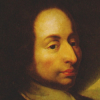
Blaise Pascal
Blaise Pascalwas a French mathematician, physicist, inventor, writer and Christian philosopher. He was a child prodigy who was educated by his father, a tax collector in Rouen. Pascal's earliest work was in the natural and applied sciences where he made important contributions to the study of fluids, and clarified the concepts of pressure and vacuum by generalising the work of Evangelista Torricelli. Pascal also wrote in defence of the scientific method...
NationalityFrench
ProfessionPhilosopher
Date of Birth19 June 1623
CityClermont-Ferrand, France
CountryFrance
There are some who speak well and write badly. For the place and the audience warm them, and draw from their minds more than they think of without that warmth.
Everything that is written merely to please the author is worthless.
Vanity is so secure in the heart of man that everyone wants to be admired: even I who write this, and you who read this.
The last thing we decide in writing a book is what to put first.
Those who write against vanity want the glory of having written well, and their readers the glory of reading well, and I who write this have the same desire, as perhaps those who read this have also.
Even those who write against fame wish for the fame of having written well, and those who read their works desire the fame of having read them.
Vanity is so anchored in the heart of man that a soldier, a soldier's servant, a cook, a porter brags and wishes to have his admirers. Even philosophers wish for them. Those who write against vanity want to have the glory of having written well; and those who read it desire the glory of having read it. I who write this have perhaps this desire, and perhaps those who will read it.
When we see a natural style, we are astonished and charmed; for we expected to see an author, and we find a person.
If I had more time I would write a shorter letter.
It's not those who write the laws that have the greatest impact on society. It's those who write the songs.
Reason's last step is the recognition that there are an infinite number of things which are beyond it
Who would desire to have for a friend a man who talks in this fashion? Who would choose him out from others to tell him of his affairs? Who would have recourse to him in affliction? And indeed to what use in life could one put him?
Kind words produce their images on men's souls.
Man's greatness lies in his power of thought.