Buzz Aldrin
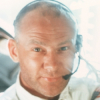
Buzz Aldrin
Buzz Aldrinis an American engineer and former astronaut. As the Lunar Module Pilot on Apollo 11, he was one of the first two humans to land on the Moon, and the second person to walk on it. He set foot on the Moon at 03:15:16 on July 21, 1969, following mission commander Neil Armstrong. He is a former U.S. Air Force officer with the Command Pilot rating...
NationalityAmerican
ProfessionAstronaut
Date of Birth20 January 1930
CityGlen Ridge, NJ
CountryUnited States of America
Standing on the Moon looking back at Earth - this lovely place you just came from - you see all the colours, and you know what they represent. Having left the water planet, with all that water brings to Earth in terms of colour and abudance life, the absence of water and atmosphere on the desolate surface of the Moon gives rise to a stark contrast.
Retain the vision for space exploration. If we turn our backs on the vision again, we're going to have to live in a secondary position in human space flight for the rest of the century.
We need to begin thinking about building permanence on the Red Planet, not just have voyagers do some experiments, plant a flag and claim success. Having them go there, repeat this, in my view, is dim-witted. Why not stay there?
Space tourism is a logical outgrowth of the adventure tourist market.
Fighter pilots have ice in their veins. They don't have emotions. They think, anticipate. They know that fear and other concerns cloud your mind from what's going on and what you should be involved in.
I think there would be no shortage of applicants to the government astronaut corps to be settlers on the planet Mars. And I think this would be very inspiring.
I came to dedicate my life to opening space to the average person and crafting designs for new spaceships that could take us far from home. But since Apollo ended, such travels were only in our collective memory.
Mars could very well be a staging location for the resources of the asteroid belt. We have to learn how to get a payback somewhere, but it's beyond Mars that the real payoff will come from minerals.
The view from space is like having a globe on your desk -- it's a broadening experience.
The future is about wings and wheels and new forms of space transportation, along with our deep-space ambition to set foot on another world in our solar system: Mars. I firmly believe we will establish permanence on that planet. And in reaching for that goal, we can cultivate commercial development of the moon, the asteroid belt, the Red Planet itself and beyond.
I was saddened to learn of the passing of Leonard Nimoy, a fellow space traveler because he helped make the journey into the final frontier accessible to us all.... Indeed, there are strange new worlds to explore -- to seek out new life and start new civilizations. It is time to boldly go where no man -- or woman -- has gone before. Thanks to Leonard Nimoy and his beloved Mr. Spock, the bar has been set high for us to continue humanity's quest to probe outward in the universe.
There's no doubt that there will be many trials and tribulations along the way in taming space for the benefit of all, unmasking its truths and using the boundless resources available to us. Taking a chance allows us to seek new horizons -- and we all benefit from being horizon hunters.
As time goes by, I'm increasingly impressed by how very special and timely it was that we got the degree of national commitment needed to put people on the Moon. For the first time, this nation was united in trying to develop an interplanetary capability. We've been trying to repeat that situation ever since.
If we go back to the moon, we're guaranteed second, maybe third place because while we are spending all that money, Russia has its eye on Mars. Landing people on the moon will be terribly consuming of resources we don't have. It sounds great - 'Let's go back. This time we're going to stay.' I don't know why you would want to stay on the moon.