Carl Jung
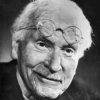
Carl Jung
Carl Gustav Jungwas a Swiss psychiatrist and psychotherapist who founded analytical psychology. His work has been influential not only in psychiatry but also in philosophy, anthropology, archaeology, literature, and religious studies. He was a prolific writer, though many of his works were not published until after his death...
NationalitySwiss
ProfessionScientist
Date of Birth26 July 1875
CityKesswil, Switzerland
CountrySwitzerland
What you call knowledge is an attempt to impose something comprehensible on life.
The teacher pretended that algebra was a perfectly natural affair, to be taken for granted, whereas I didn't even know what numbers were. Mathematics classes became sheer terror and torture to me. I was so intimidated by my incomprehension that I did not dare to ask any questions.
In the second half of life the necessity is imposed of recognizing no longer the validity of our former ideals but of their contraries. Of perceiving the error in what was previously our conviction, of sensing the untruth in what was our truth, and of weighing the degree of opposition, and even of hostility, in what we took to be love.
Just as we tend to assume that the world is as we see it, we naively suppose that people are as we imagine them to be.
Nobody can fall so low unless he has a great depth. If such a thing can happen to a man, it challenges his best and highest on the other side; that is to say, this depth corresponds to a potential height, and the blackest darkness to a hidden light.
Psychiatrists classify a person as neurotic if he suffers from his problems in living, and a psychotic if he makes others suffer.
At present we educate people only up to the point where they can earn a living and marry; then education ceases altogether, as though a complete mental outfit had been acquired. ... Vast numbers of men and women thus spend their entire lives in complete ignorance of the most important things.
Because the European does not know his own unconscious, he does not understand the East and projects it into everything he fears and despises in himself.
Paul hardly ever allows the real Jesus of Nazareth to get a word in.
What usually has the strongest psychic effect on the child is the life which the parents have not lived
In all earnestness I asked myself what kind of world I had stumbled into.
For, in order to turn the individual into a function of the State, his dependence on anything beside the State must be taken from him.
Only a life lived in a certain spirit is worth living. It is a remarkable fact that a life lived entirely from the ego is dull not only for the person himself but for all concerned.
It is the individual's task to differentiate himself from all the others and stand on his own feet. All collective identities . . . interfere with the fulfillment of this task. Such collective identities are crutches for the lame, shields for the timid, beds for the lazy, nurseries for the irresponsible. . . .