Carlos Ghosn
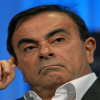
Carlos Ghosn
Carlos Ghosn, KBEis a French-Lebanese-Brazilian businessman born in Porto Velho, Brazil, who is currently the Chairman and CEO of France-based Renault, and Chairman and CEO of Japan-based Nissan. From June 2013 to June 2016, Ghosn was Chairman of Russia-based automobile manufacturer AvtoVAZ. Ghosn is also Chairman and CEO of the Renault-Nissan Alliance, the strategic partnership overseeing Nissan and Renault through a unique cross-shareholding agreement. The Alliance, which includes AvtoVAZ, has held approximately 10% of the global market share from 2010...
NationalityBrazilian
ProfessionEntrepreneur
Date of Birth9 March 1954
CityPorto Velho, Brazil
CountryBrazil
I approve designs not because I think I am more gifted or somebody who can see ahead three or four years from now, but just to make sure that the design is a logical, rational decision, taken after analyzing pros and cons.
I think we're going to have some difficulty in front of us. I have absolutely no doubt the next three, four years Europe are going to be at best stagnation. We are preparing for tough times.
Talking about stepping down in five years is frankly not a topic of particular actuality now.
Being a good leader today doesn't mean you'll be a good leader 10 years from now. You have to adapt to the times
Our goal is to move as many people as possible to the new location. Fifty percent of current employees would be the best possible result.
Renault is not in crisis, but Renault is fragile.
Manufacturers must reawaken passion for cars and trucks and restore the value to the minds of our customers.
I was the only guy standing in front of the tide.
We think there is a real threat that logically we could be brought to the conclusion that the best investment is not in Sunderland, but maybe somewhere on the (European) continent,
I love not to be busy in a certain way.
We are not worried so much about that. There is such a high demand for the jobs.
The only breakthrough technology is fuel cell because this is the one that guarantees you are out of oil dependency,
We are still keeping, as much as we can to the one million commitment that we made, hoping that at a certain point in time, the headwinds represented by the strength of the yen will be a little bit less strong.
If we come to the conclusion after 90 days that the synergies are big enough to justify the efforts, then we can go to the second step, which consists of saying: what would be the best organization and conditions - including shareholdings - in order to make sure the synergies happen.