Cass Sunstein
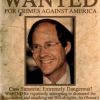
Cass Sunstein
Cass Robert Sunsteinis an American legal scholar, particularly in the fields of constitutional law, administrative law, environmental law, and law and behavioral economics, who was the Administrator of the White House Office of Information and Regulatory Affairs in the Obama administration from 2009 to 2012. For 27 years, Sunstein taught at the University of Chicago Law School. Sunstein is the Robert Walmsley University Professor at Harvard Law School...
NationalityAmerican
ProfessionPolitician
Date of Birth21 September 1954
CountryUnited States of America
There's a big difference between the role of an academic and the role of someone in government. That's a cliche, but in academic life if you say things that are common sense and people nod their heads, it's not very useful. You're not adding anything.
Democrats want to use government power to make people's lives go better; Republicans respond that people know more than politicians do. We think that both might be able to agree that nudging can maintain free markets, and liberty, while also inclining people in good directions.
My role in the government was not to think about narratives and consistency with narratives, but think of the human consequences of rules.
Most problems are best solved privately, not through government. There's a problem of discourtesy in the world, which is best handled through social norms, which are indispensable. But you wouldn't want the government to be mandating courtesy.
A system of limitless individual choices, with respect to communications, is not necessarily in the interest of citizenship and self-government.
Sunstein said government agents ‘might enter chat rooms, online social networks, or even real-space groups and attempt to undermine percolating conspiracy theories by raising doubts about their factual premises, causal logic or implications for political action,’
Because those who hold conspiracy theories typically suffer from a crippled epistemology, in accordance with which it is rational to hold such theories, the best response consists in cognitive infiltration of extremist groups. Various policy dilemmas, such as the question whether it is better for government to rebut conspiracy theories or to ignore them, are explored in this light.
I think the White House is torn internally,
Why should we be governed by people long dead? ... In any case, the group that ratified the Constitution included just a small subset of the society; it excluded all women, the vast majority of African Americans, many of those without property, and numerous others who were not permitted to vote.
This part of the 21st century is preoccupied with risk, and there's a lot that law can do to make lives longer and healthier.
It's hard to get me out of the office.
If I may discuss the idea of explosion. The number of regulations issued in the last two years is approximately the same as the number issued in the last two years of the Bush administration.
Today, we are announcing that agencies are releasing their final regulatory reform plans, including hundreds of initiatives that will reduce costs, simplify the system, and eliminate redundancy and inconsistency.
When you think commerce clause, don't think technical and meaningless. Think in what ways can the elected representatives of the people provide protection against serious harm.