Charles Darwin
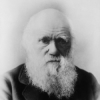
Charles Darwin
Charles Robert Darwin, FRS FRGS FLS FZSwas an English naturalist and geologist, best known for his contributions to the science of evolution. He established that all species of life have descended over time from common ancestors, and in a joint publication with Alfred Russel Wallace introduced his scientific theory that this branching pattern of evolution resulted from a process that he called natural selection, in which the struggle for existence has a similar effect to the artificial selection involved in...
ProfessionScientist
Date of Birth12 February 1809
CityShrewsbury, England
Whenever I have found that I have blundered, or that my work has been imperfected, and when I have been contemptuously criticised, and even when I have been overpraised, so that I have felt mortified, it has been my greatest comfort to say hundreds of times to myself that 'I have worked as hard as I could, and no man can do more than this.'
... not one living species will transmit its unaltered likeness to a distant futurity.
If a person asked my advice, before undertaking a long voyage, my answer would depend upon his possessing a decided taste for some branch of knowledge, which could by this means be advanced. No doubt it is a high satisfaction to behold various countries and the many races of mankind, but the pleasures gained at the time do not counterbalance the evils.
I cannot persuade myself that a beneficient and omnipotent God would have designedly created...that a cat should play with mice.
On your life, underestimating the proclivities of finches is likely to lead to great internal hemorrhaging.
Natural selection acts solely by accumulating slight successive favorable variations, it can produce no great or sudden modification; it can act only by very short steps.
... probably all the organic beings which have ever lived on this earth have descended from some one primordial form, into which life was first breathed.
The instruction at Edinburgh was altogether by lectures, and these were intolerably dull, with the exception of those on chemistry.
The willing horse is always overworked.
Now when naturalists observe a close agreement in numerous small details of habits, tastes and dispositions between two or more domestic races, or between nearly-allied natural forms, they use this fact as an argument that all are descended from a common progenitor who was thus endowed; and consequently that all should be classed under the same species. The same argument may be applied with much force to the races of man.
The moral faculties are generally esteemed, and with justice, as of higher value than the intellectual powers. But we should always bear in mind that the activity of the mind in vividly recalling past impressions is one of the fundamental though secondary bases of conscience. This fact affords the strongest argument for educating and stimulating in all possible ways the intellectual faculties of every human being.
Mere chance ... alone would never account for so habitual and large an amount of difference as that between varieties of the same species.
A republic cannot succeed, till it contains a certain body of men imbued with the principles of justice and honour.
As natural selection works solely by and for the good of each being, all corporeal and mental endowments will tend to progress toward perfection.