Charles Darwin
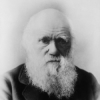
Charles Darwin
Charles Robert Darwin, FRS FRGS FLS FZSwas an English naturalist and geologist, best known for his contributions to the science of evolution. He established that all species of life have descended over time from common ancestors, and in a joint publication with Alfred Russel Wallace introduced his scientific theory that this branching pattern of evolution resulted from a process that he called natural selection, in which the struggle for existence has a similar effect to the artificial selection involved in...
ProfessionScientist
Date of Birth12 February 1809
CityShrewsbury, England
I could show fight on natural selection having done and doing more for the progress of civilization than you seem inclined to admit. Remember what risk the nations of Europe ran, not so many centuries ago of being overwhelmed by the Turks, and how ridiculous such an idea now is! The more civilised so-called Caucasian races have beaten the Turkish hollow in the struggle for existence. Looking to the world at no very distant date, what an endless number of the lower races will have been eliminated by the higher civilized races throughout the world.
It seems to me absurd to doubt that a man may be an ardent Theist and an evolutionist. ... I have never been an atheist in the sense of denying the existence of a God.
The love for all living creatures is the most noble attribute of man.
It is not the strongest of the species that survive, nor the most intelligent, but the one most responsive to change.
A man who dares to waste one hour of life has not discovered the value of life
The belief in God has often been advanced as not only the greatest but the most complete of all the distinctions between man and the lower animals. It is, however, impossible to maintain that this belief is instinctive in man. The idea of a universal and beneficent creator does not seem to arise in the mind of man until he has been elevated by long, continued culture.
These huge reptiles, surrounded by the black lava, the leafless shrubs and large cacti, seemed to my fancy like some antediluvian animals. The few dull-colored birds cared no more for me than they did for the great tortoises.
The evolution of the human race will not be accomplished in the ten thousand years of tame animals, but in the million years of wild animals, because man is and will always be a wild animal.
The highest stage in moral ure at which we can arrive is when we recognize that we ought to control our thoughts.
An American Monkey after getting drunk on Brandy would never touch it again, and thus is much wiser than most men
It is generally admitted that with woman the powers of intuition, of rapid perception and perhaps of imitation, are more strongly marked than in man: but some, at least, of these faculties are characteristic of the lower races, and therefore of a pas
Why then is not every geological formation and every stratum full of such intermediate links? Geology assuredly does not reveal any such fine graduated organic chain; and this, perhaps, is the most obvious and serious objection which can be urged against the theory.