Charles Krauthammer
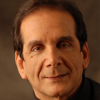
Charles Krauthammer
Charles Krauthammeris an American Pulitzer Prize-winning syndicated columnist, author, political commentator, and physician. His weekly column is syndicated to more than 400 newspapers worldwide. He is a contributing editor to the Weekly Standard and a nightly panelist on Fox News Channel's Special Report with Bret Baier. He was a weekly panelist on PBS news program Inside Washington from 1990 until it ceased production in December 2013...
NationalityAmerican
ProfessionJournalist
Date of Birth13 March 1950
CityNew York City, NY
CountryUnited States of America
I have a horror of the blank page. I simply cannot write on a blank page or screen. Because once I do, I start to fix it, and I never get past the first sentence.
It is simply ridiculous to say it cannot be done. If one fence won't do it, then build a second 100 yards behind it. And then build a road for patrols in between. Put cameras. Put sensors. Put out lots of patrols.
Our crisis of today is Katrina, probably a couple of hundred billion, and I think you start by canceling every earmark, all 6,371 earmarks, special pork spending, in the newly-passed transportation bill. It's only $24 billion, lunch money, but it's a rather ample lunch.
The world is a Hobbesian state of nature in which the struggle for domination is the very essence of international life.
Newt Gingrich had to work hard - getting Republican candidates to sign the Contract with America - to nationalize the election that swept Republicans to victory in 1994. A Democratic anti-Tea Party campaign would do that for the Republicans - nationalize the election, gratis - in 2010.
After endless days of commuting on the freeway to an antiseptic, sealed-window office, there is a great urge to backpack in the woods and build a fire.
The only reason the president insists on raising [tax] rates is because he knows it will destroy Republican unity, it will cause a complete fracture of the Republican majority in the house, it will hand him a Congress that he can then manipulate for the next two years at least because the Republicans will be neutered. ... This is entirely a political action, a way to get a surrender from the Republicans.
Would a Friday night be best? Or a really big news day?
I don't think you can pump carbon dioxide into the atmosphere indefinitely and not have a reaction. But there are great scientists such as Freeman Dyson, one of the greatest physicists of the last hundred years, who has studied the question, who believes quite the opposite. The reason transnational action is so difficult is because the major problem with climate change is, A, that there is no consensus, and, B, that the economic cost is simply staggering. Reversing it completely might mean undoing the modern industrial economy.
There are cycles in American politics. US cycles are even more pronounced because we Americans have a totally entrepreneurial presidential system. We don't have parliamentary opposition parties with a shadow prime minister and shadow cabinets. Every four years, the opposition reinvents itself.
There's no free lunch. If you want an industrial economy, you need energy. If you want energy, it will produce pollution. You can have it in two forms. You can have it dissipated in the atmosphere - like carbon dioxide - which then you cannot recover, or you can have the waste concentrated in one small space like nuclear. That is far easier to deal with. The idea that you can be able to create renewable energy at a price anywhere near the current price for oil or gas or coal is a fantasy.
I'm not against international institutions that would try to tackle global warming. But the way to go, at least in the short run, is to go to nuclear power. It's amazing to me that people who are so alarmed about global warming are so reluctant to adopt the obvious short-term solution - the bridge until the day when we have affordable renewable energy - of nuclear power.
Truman left in the middle of an unpopular war, a war of choice. Truman didn't have to go into South Korea. And he was reviled and ridiculed for the stalemate that resulted. Now, he's seen as one of the great presidents of the 20th century.
The peasants have seen the future - Greece and France - and concluded that it does not work. Hence their opposition to Obama's proudly transformational New Foundation agenda. Their logic is impeccable: Only the most blinkered intellectual could be attempting to introduce social democracy to America precisely when the world's foremost exemplar of that model - Europe - is in chaotic meltdown.