Charlie Munger
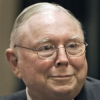
Charlie Munger
Charles Thomas Mungeris an American businessman, lawyer, investor, and philanthropist. He is vice chairman of Berkshire Hathaway, the conglomerate controlled by Warren Buffett; in this capacity, Buffett describes Charlie Munger as “my partner." Munger served as chairman of Wesco Financial Corporation from 1984 through 2011. He is also the chairman of the Daily Journal Corporation, based in Los Angeles, California, and a director of Costco Wholesale Corporation...
NationalityAmerican
ProfessionEntrepreneur
Date of Birth1 January 1924
CountryUnited States of America
The perfect example of Darwinism is what technology has done to businesses.
When someone takes their existing business and tries to transform it into something else - they fail. In technology that is often the case. Look at Kodak: it was the dominant imaging company in the world. They did fabulously during the great depression, but then wiped out the shareholders because of technological change.
In Gillette's case, they keep surfing along new technology which is fairly simple by the standards of microchips. But it's hard for competitors to do. So they've been able to stay constantly near the edge of improvements in shaving.
If the technology hadn't changed, [newspapers would] still be great businesses. Network TV [in its heyday,] anyone could run and do well. If Tom Murphy as running it, you'd do very well, but even your idiot nephew could do well. Fortunately, carbide cutting tools [such as those made by Iscar] don't have these types of substitutes.
The great lesson in microeconomics is to discriminate between when technology is going to help you and when it's going to kill you. And most people do not get this straight in their heads. But a fellow like Buffett does. For example, when we were in the textile business, which is a terrible commodity business, we were making low-end textiles-which are a real commodity product. And one day, the people came to Warren and said, "They've invented a new loom that we think will do twice as much work as our old ones."
If all you needed to do is to figure out what company is better than others, everyone would make a lot of money. But that is not the case. They keep raising the prices to the point when the odds change.
I believe Costco does more for civilization than the Rockefeller Foundation. I think it's a better place. You get a bunch of very intelligent people sitting around trying to do good, I immediately get kind of suspicious and squirm in my seat.
There's danger in just shoveling out money to people who say, 'My life is a little harder than it used to be.' At a certain place you've got to say to the people, 'Suck it in and cope, buddy. Suck it in and cope.'
People are trying to be smart - all I am trying to do is not to be idiotic, but it's harder than most people think.
Everyone has the idea of owning good companies. The problem is that they have high prices in relations to assets and earnings, and that takes all of the fun out of the game.
Gold is a great thing to sew into your garments if you're a Jewish family in Vienna in 1939, but I think civilized people don't buy gold, they invest in productive businesses.
I would argue that a majority of the horrors we face would not have happened if the accounting profession developed and enforced better accounting.
Accounting is a big subject and there are huge forces in play. The entire momentum of existing thinking and existing custom is in a direction that allows terrible follies to happen, and the terrible follies have terrible consequences.
Derivative trading with mark-to-market accounting degenerates into mark-to-model. Two firms make a big derivative trade and the accountants on both sides show a large profit from the same trade.