Christopher Alexander
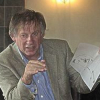
Christopher Alexander
Christopher Wolfgang Alexander is a widely influential architect and design theorist, and currently emeritus professor at the University of California, Berkeley. His theories about the nature of human-centered design have had notable impacts across many fields beyond architecture, including urban design, software, sociology and other fields. Alexander has also designed and personally built over 100 buildings, both as an architect and a general contractor...
NationalityAmerican
ProfessionArchitect
Date of Birth4 October 1936
CountryUnited States of America
The specific patterns, out of which a building or a town is made may be alive or dead. To the extent they are alive, they let our inner forces loose, and, set us free; but when they are dead they keep us locked in inner conflict.
In an organic environment, every place is unique, and the different places also cooperate, with no parts left over, to create a global whole - a whole which can be identified by everyone who is part of it.
Speaking as a builder, if you start something, you must have a vision of the thing which arises from your instinct about preserving and enhancing what is there.
But in practice master plans fail - because they create totalitarian order, not organic order. They are too rigid; they cannot easily adapt to the natural and unpredictable changes that inevitably arise in the life of a community.
Yet still, there are those special secret moments in our lives, when we smile unexpectedly-when all our forces are resolved. A woman can often see these moments in us, better than a man, better than we ourselves, even. When we know these moments, when we smile, when we are not on guard at all-these are the moments when our most important forces show themselves; whatever it is you are doing at such a moment, hold on to it, repeat it-for that certain smile is the best knowledge that we ever have of what our hidden forces are, and where they lie, and how they can be loosed.
In short, no pattern is an isolated entity. Each pattern can exist in the world only to the extent that is supported by other patterns: the larger patterns in which it is embedded, the patterns of the same size that surround it, and the smaller patterns which are embedded in it.
There is a myth, sometimes widespread, that a person need only do inner work...that a man is entirely responsible for his own problems; and that to cure himself, he need only change himself....The fact is, a person is so formed by his surroundings, that his state of harmony depends entirely on his harmony with his surroundings.
Most of the wonderful places in the world were not made by architects but by the people.
Drawings help people to work out intricate relationships between parts.
Every place is given its character by certain patterns of events that keep on happening there.... These patterns of events are locked in with certain geometric patterns in the space. Indeed, each building and each town is ultimately made out of these patterns in the space, and out of nothing else; they [patterns in the space] are the atoms and molecules from which a building or a town is made.
To seek the timeless way we must first know the quality without a name. There is a central quality which is the root criterion of life and spirit in a man, a town, a building, or a wilderness. This quality is objective and precise, but it cannot be named.
Once you understand this way, you will be able to make your room alive; you will be able to design a house together with your family; a garden for your children; places where you can work; beautiful terraces where you can sit and dream.
All matter/space has some degree of "self" in it, and this self, or anyway some aspect of the personal, is something which infuses all matter/space and everything we know as matter but now think to be mechanical.
From a sequence of these individual patterns, whole buildings with the character of nature will form themselves within your thoughts, as easily as sentences.