Chuck Close
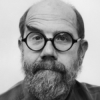
Chuck Close
Charles Thomas "Chuck" Closeis an American painter/artist and photographer who achieved fame as a photorealist, through his massive-scale portraits. Close often paints abstract portraits, that are shown in the world's finest galleries. Although a catastrophic spinal artery collapse in 1988 left him severely paralyzed, he has continued to paint and produce work that remains sought after by museums and collectors. Close lives and works in Bridgehampton, New York and Long Beach, NY and New York City's East Village. His first...
NationalityAmerican
ProfessionPhotographer
Date of Birth5 July 1940
CityMonroe, WA
CountryUnited States of America
Never let anyone define what you are capable of by using parameters that don’t apply to you.
I don't want the viewer to be able to peel away the layers of my painting like the layers of an onion and find that all the blues are on the same level.
I don't do commissioned portraits and I don't paint college presidents. I can't imagine what kind of ego it would take to want to have a 9-foot-high picture of yourself.
I don't care about the Guggenheim. The Guggenheim isn't involved in anything that I am interested in. I don't care about motorcycles and Armani suits.
No one was more surprised than me when my paintings started selling, except maybe my dealer.
I mean, if you think about a writer, you're going to write a novel that takes several months, but there's never a time you're doing anything more than shoving one word up against the next. And clusters of those words make sentences and paragraphs and a chapter. You just try to maintain the same voice and the same attitude so it sounds like the same person wrote the last chapter that wrote the first chapter.
I have no intention of flattering people. I like wrinkles and crow's feet and flaws, and somebody should know, if I'm going to photograph them, that's going to show up, you know?
If you think about the way a composer would go in a room and score, let's say, the oboe's gonna play this note, the bassoon's gonna play that note, the french horn will play that note, the resultant sound, the combination of those notes makes kind of a chord, and I'm doing the same thing with color.
I tried to, with a series of self-imposed limitations, back myself into my own personal corner where nobody else's answers would fit. I've always thought that problem-solving is highly overrated and that problem creation is far more interesting.
The city continues to be a magnet for the best and the brightest that come here from all over the country and all over the world. It's a very vital exciting community. The art world gobbles up people and spits them out the other end and keeps chugging along.
And I think, you know, painters drop crumbs along the trail, Hansel and Gretel style, for people to pick up if they want to.
You don't have to have a great art idea - just get to work and something will happen. So that's pretty much my modus operandi and pretty much my principal position, such as it is.
I wanted to translate from one flat surface to another. In fact, my learning disabilities controlled a lot of things. I don't recognize faces, so I'm sure it's what drove me to portraits in the first place.
My mother was a piano teacher, my father an inventor. He invented the reflective paint they still use on airstrips. They had faith in my ambition, and I think that made all the difference.