Conrad Hall
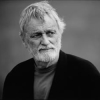
Conrad Hall
Conrad Lafcadio Hall, ASCwas an American cinematographer from Papeete, Tahiti, French Polynesia. Named after writers Joseph Conrad and Lafcadio Hearn, he was best known for photographing films such as In Cold Blood, Cool Hand Luke, Butch Cassidy and the Sundance Kid, American Beauty, and Road to Perdition. For his work he garnered a number of awards, including three Academy Awards and BAFTA Awards...
NationalityAmerican
ProfessionCinematographer
Date of Birth21 June 1926
CountryUnited States of America
There are a lot of directors who are knowledgeable about images, and others who aren't.
It is also difficult to articulate the subtleties in cinema, because there aren't words or metaphors which describe many of the emotions you are attempting to evoke.
But you know you haven't done it all because you know everything keeps evolving and changing; and you know you can evolve with it if you grow and develop as a human being.
The closer the source of light is to a subject, the broader the beams are.
The sun is the most parallel light source because it is so far away.
I hope I'm still shooting when I'm 80.
It was 100 feet of 16 mm black-and-white film of a car coming to a stop sign, and driving off. I had to decide how to frame and light it. It was magic. There was a sense of mystery.
But at heart, I am more than a cinematographer.
In Hollywood, maybe only ten percent will make it and the other ninety percent try. This elusive dream of making it and being on top is the same story as the moth being drawn to the flame. The flame and it's attractiveness is something you'll never eliminate. Some will learn how to live in that environment and others will burn in it.
I think one of the reasons people quit is because they're afraid they won't be able to get better and better; that they have to come to a zenith of some kind.
To me, the camera is like a musical instrument. You use it to control the flow, shape, size and colors of images.
You have to understand the nature of light.
Billions of people have seen and been influenced by movies in the short history of this industry.
Every cinematographer I worked with had his own way of solving problems.