Conrad Veidt
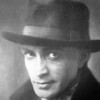
Conrad Veidt
Hans Walter Conrad Veidtwas a German actor best remembered for his roles in films such as The Cabinet of Dr. Caligari, The Man Who Laughs, and, after being forced to migrate to Britain by the rise of Nazism in Germany, his English-speaking roles in The Thief of Bagdad, and, in Hollywood, Casablanca. After a successful career in German silent film, where he was one of the best-paid stars of Ufa, he left Germany in 1933 with his new Jewish wife...
NationalityGerman
ProfessionMovie Actor
Date of Birth22 January 1893
CityBerlin, Germany
CountryGermany
An actor remembers his first piece of published praise. It is written on his heart.
I was never a villain on the stage. I always played strong, sympathetic types. My first stage role with a speaking part, believe it or not, was as a priest. It wasn't until I began acting in films that the producers and directors saw me primarily as a bizarre villain.
I used to think then that I was Bohemian, but I know now that I am not. I prefer order and precision to untidiness and looseness.
For me, half the joy of achieving has been the struggle and the fight, the pitting myself against the world and all its competition - and winning.
In the middle of my third Hollywood picture The Magician, the earthquake hit Hollywood. Not the real earthquake. Just the talkies.
I am indifferent if my spinach is leaf or creamed; if I work to fatiguing point or spend days doing nothing; if I smoke fifty cigarettes a day or none at all; if it rains or shines; if the dentist hurts, or the shoe pinches, or I secure a bargain.
When I was in a play in a theater, and all was going well on stage, I felt that the audience and I were somehow joined into one.
The right partner in a film is equal to half the audience!
The one thing I look for everywhere is beauty. I find it everywhere, and in almost every person. A lovely painting, a good book, or music moves me. It has a life of its own. But I get just as satisfying a thrill when I look at streets wet with rain or see a typist's quick fingers traveling with precision over her keyboard.
I think, myself, it is harder for two artists, both ambitious, both temperamental, both perhaps egotistical, to jog along equably in the necessarily restraining atmosphere of a double harness.
I was elated by my success in my work, but shattered over my mother's death, and miserable about the way my marriage seemed to be foundering. And one day when my wife was away, I walked out of the house, and out of her life, trying to escape from something I could put no name to.
It was like a physical impact, something vital and quick, happening to us both. And I knew, from that moment, that whatever happened between us, we might disagree, get on each other's nerves, quarrel, do each other harm, but we could never be indifferent.
I have no illusions about my art. I am what the public made me and, consequently, I am not likely to forget my debt to them.
It is my greatest joy to live a really good part, even though it imposes great strain. An artist is tired but proud when he has created a great work of art. So it is with the actor who really lives a great role and is proud of the part he played.