Cornel West
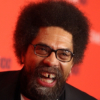
Cornel West
Cornel Ronald Westis an American philosopher, academic, social activist, author, public intellectual, and prominent member of the Democratic Socialists of America. The son of a Baptist minister, West received his undergraduate education from Harvard University, graduating with a bachelor's degree in 1973, and received a Ph.D. from Princeton University in 1980, becoming the first African American to graduate from Princeton with a Ph.D. in philosophy. He taught at Harvard in 2001 before leaving the school after a highly publicized dispute...
NationalityAmerican
ProfessionEducator
Date of Birth2 June 1953
CountryUnited States of America
Frank Rich, Paul Krugman, Maureen Dowd, a whole host of brilliant, courageous critics say all kinds of things, and he [Barack Obama] treats them with respect. They get invited to the White House. I say the same thing, he talks to me like I'm a Cub Scout.
A philosopher's a lover of wisdom.
The powerful have no monopoly on greed, hatred, fear, or ignorance.
Philosophy is fundamentally about how you come to terms with living your life and trying to do it in a wise manner, and, for me, that means decently and compassionately and courageously and so forth.
Well technologically and so forth, it's a breakthrough, and yet [Birth of a Nation,] it's very white supremacist to the core in terms of the narrative content.
Martin King was fundamentally committed to the least of these [poor, working people]. Of course, he was a Christian soldier for justice from the 25th chapter of Matthew.
In that chocolate side of town, in my blessed city of Sacramento, California - that was beginning of my death shudders, that's why Kierkegaard and Kafka began to make sense to me when I was very, very young - that radical sense fragility of life and inevitability of death; those trucks coming, if the truck came at a same time I was on the bridge, I was in the creek -my body would be the culinary delight of terrestrial worms.
I'm black, so, you know, I'm again with black folk, but it's a love that spills over to vanilla suburbs and red reservations and brown barrios and yellow slices.
I know my dear brother, President [Barack] Obama, has a bust of Martin King right there in the Oval Office, but the question is are is he going to be true to who that Martin Luther King, Jr., actually is? King was concerned about what? The poor. He was concerned about working people. He was concerned about quality jobs. He was concerned about quality housing. He was concerned about precious babies in Vietnam, the way we ought to be concerned about precious babies in Afghanistan and precious babies in Tel Aviv and precious babies in Gaza.
When you think of 244 years of slavery and 81 years of that finally you are going to be allowed to be part of the pool from which people choose jobs. That's not a substantive kind of move, but it was very important.
You're trying to just leave the world a little better.
I have a whole lot of fun in trying to serve others and just keeping it funky, trying to keep it real, trying to ensure that we are able to be ourselves and get beyond these deodorized discourses and deodorized spaces that put on masks.
I think anytime we talk about transforming in capitalist society, we are talking about a process not a particular event so you can't talk about a socialist revolution.
The condition of truth, is to allow suffering to speak. Which means attend to suffering of the least of these, of the orphan, the widow, the poor, the working people, the gay brother, the lesbian sister, the transgender, the black people.