Dambisa Moyo
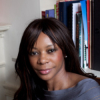
Dambisa Moyo
Dambisa Moyo2 February 1969) is a Zambian-born international economist and author who analyzes the macroeconomy and global affairs. With post-graduate degrees in business, public administration, and economics from American University, Harvard, and Oxford, Moyo currently serves on the boards of Barclays Bank, the financial services group, SABMiller, the global brewer, and Barrick Gold, the global miner. She worked for two years at the World Bank and eight years at Goldman Sachs before becoming an author and international public speaker. She...
NationalityZambian
ProfessionEconomist
Date of Birth2 February 1969
CountryZambia
I was initially very interested in public policy, but then after my masters at Harvard, I felt that it was important to get a better handle on the economics of it as well. I did my Ph.D. in macroeconomics, and my thesis - 'Why Is It That Some Countries Save And Others Not?' - was on savings.
Too many African countries have already hit rock-bottom - ungoverned, poverty-stricken, and lagging further and further behind the rest of the world each day; there is nowhere further to go down.
The fact of the matter is that instead of going around the world and haranguing countries for engaging with China, the West should be encouraging its own businesses to trade and invest in these regions.
The insidious aid culture has left African countries more debt-laden, more inflation-prone, more vulnerable to the vagaries of the currency markets and more unattractive to higher-quality investment.
Many Africans succumb to the idea that they can't do things because of what society says. Images of Africa are negative - war, corruption, poverty. We need to be proud of our culture.
My mother is chairman of a bank called the Indo-Zambia Bank. It's a joint venture between Zambia and India. My father runs Integrity Foundation, an anticorruption organization.
The fact that China has about seven percent arable land, means that she's always going to be looking for places that have more arable lands to finance or to provide food stuffs.
The fact that Brazil and Chile now has China as their largest trading partner means the Monroe Doctrine is certainly something of the past.
Ask most people who live in a home and have a mortgage on it whether they own their own home and the answer is almost guaranteed to be a resounding 'yes'. Yet it's the wrong answer. Technically speaking, until they have paid the mortgage off, they don't own it. Herein lies the difference between reality and illusion, between ownership and control. This confusion lies not only at the individual level, but also at the heart of government thinking.
If you think about the last 50 years, Africa's proximity and historical context has absolutely been with Europe and the United States, but their approach in dealing with the economic challenges that Africa faces in particular has been one of handing out aid, not developing economies, not building a long term relationship around agriculture and so on.
In a perfect world what poor countries at the lowest rungs of economic development need is not a multi-party democracy, but in fact a decisive benevolent dictator to push through the reforms required to get the economy moving
The notion that aid can alleviate systemic poverty, and has done so, is a myth. Millions in Africa are poorer today because of aid; misery and poverty have not ended but increased. Aid has been, and continues to be, an unmitigated political, economic, and humanitarian disaster for most parts of the developing world.
I wish we questioned the aid model as much as we are questioning the capitalism model. Sometimes the most generous thing you can do is just say no.
Under the all-encompassing aid system, too many places in Africa continue to flounder under inept, corrupt and despotic regimes who spend their time courting and catering to the demands of the army of aid organizations.