Dave Brubeck
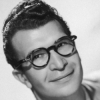
Dave Brubeck
David Warren "Dave" Brubeckwas an American jazz pianist and composer, considered to be one of the foremost exponents of cool jazz. He wrote a number of jazz standards, including "In Your Own Sweet Way" and "The Duke". Brubeck's style ranged from refined to bombastic, reflecting his mother's attempts at classical training and his improvisational skills. His music is known for employing unusual time signatures, and superimposing contrasting rhythms, meters, and tonalities...
NationalityAmerican
ProfessionPianist
Date of Birth6 December 1920
CityConcord, CA
CountryUnited States of America
You could play probably a span of 50 years of me playing St. Louis Blues, and most of the time it will be different every time.
What I want to happen is to be really creative, and to play something new in the improvisations, every time.
I played a lot of sports and it's the plays in basketball that weren't worked out that are the ones that are just fantastic that you remember. We don't know the power that's within our own bodies.
When I was first aware that I couldn't read music I didn't know I couldn't read because I could play the music that was in front of me.
My mother Elizabeth Ivey Brubeck was a pianist who studied with Dame Myra Hess and Tobias Matthey. As a child in California I used to listen to her play Chopin.
My own Brubeck Institute in California is turning out fantastic young jazz players, and I know great things will happen.
I got a poster from Columbia Records, and there's Miles Davis, Charlie Mingus, Ellington, Count Basie - everybody in that poster has died, I'm the only one left. And great players like Paul Desmond and Gerry Mulligan, it's hard to believe they're gone because we were all so close. But I believe in the future and the tradition will go on.
Many people don't understand how disciplined you have to be to play jazz... And that is really the idea of democracy - freedom within the Constitution or discipline. You don't just get out there and do anything you want.
I wasn't allowed to play in some universities in the United States and out of twenty-five concerts, twenty-three were canceled unless I would substitute my black bass player for my old white bass player, which I wouldn't do.
I started growing up in a hurry and taking a lot of the philosophy I'd heard from church as a kid a lot more seriously - especially the Ten Commandments - and wondering how 'Thou shalt not kill' could be so absolutely ignored. It took me until I was in my 40s to write what I was thinking as a young soldier.
If there's a deadline, I work late. If not, I like to have normal hours, and get up early and work. When things are going well, I hate to quit. And then I'll work 'till exhausted.
Most of the international acceptance of jazz education can be traced to the University of North Texas, Denton, Texas, and the wonderful program they inaugurated.
I knew I wanted to write on religious themes when I was a GI in World War II. I saw and experienced so much violence that I thought I could express my outrage best with music.
I knew even if I'm a cowboy, I'm going to be involved in jazz in some way.