Dennis Banks
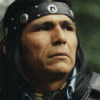
Dennis Banks
Dennis Banks, a Native American leader, teacher, lecturer, activist and author, is an Anishinaabe born on Leech Lake Indian Reservation in northern Minnesota. Banks is also known as Nowa Cumig. His name in the Ojibwe language means "In the Center of the Universe." He has been a longtime leader of the American Indian Movement, which he co-founded in 1968 with Native Americans in Minneapolis...
NationalityAmerican
ProfessionReligious Leader
Date of Birth12 April 1937
CountryUnited States of America
Many young Japanese were hearing for the first time the words of Native people from the West.
What we did in the 1960s and early 1970s was raise the consciousness of white America that this government has a responsibility to Indian people. That there are treaties; that textbooks in every school in America have a responsibility to tell the truth. An awareness reached across America that if Native American people had to resort to arms at Wounded Knee, there must really be something wrong. And Americans realized that native people are still here, that they have a moral standing, a legal standing. From that, our own people began to sense the pride.
An awareness reached across America that if Native American people had to resort to arms at Wounded Knee, there must really be something wrong.
We're bringing hope. I think that's all that we can do. And somebody was caring for them. There's a lot of people been down there that are bringing hope and we were just one of them.
The fact that these teachers are willing to share their time is important, and we are very grateful.
When we arrived in Japan in 1988, we were not prepared for the overwhelming support shown to us.
In 1967 the last Unity Caravan was held.
It is an understanding with the Great Spirit or Creator that we will follow these ways.
This strikes to the foundation of who we are. There is deep deep pain.
In 1990 we ran across Europe through 13 countries and covering 7,130 miles.
To be selected was an honor, and in respect of the family member chosen to run, families held feasts and gave away prized beaver coats, quilled tobacco bags and buffalo hides.
The Canadian run can be no different, at least in terms of actual running.
In 1978, the tradition of running from village to village with a message was revived. that first run was from Davis to Los Angeles, a distance of 500 miles
Every man should see the birth of his children