Don DeLillo
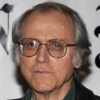
Don DeLillo
Donald Richard "Don" DeLillois an American novelist, playwright and essayist. His works have covered subjects as diverse as television, nuclear war, sports, the complexities of language, performance art, the Cold War, mathematics, the advent of the digital age, politics, economics, and global terrorism. Initially a well-regarded cult writer, the publication in 1985 of White Noise brought him widespread recognition. It was followed in 1988 by Libra, a bestseller. DeLillo has twice been a Pulitzer Prize for Fiction finalist), won the...
ProfessionNovelist
Date of Birth20 November 1936
CityBronx, NY
A dead afternoon in a dark bar was not the worst of fates.
The world is shrinking into a kind of technological funnel. I think people are drawn into their technological devices, and this becomes a kind of subjective universe, into which much of the rest of the world simply does not enter.
For me, wellbehaved books with neat plots and worked-out endings seem somewhat quaint in the face of the largely incoherent reality of modern life; and then again fiction, at least as I write it and think of it, is a kind of religious meditation in which language is the final enlightenment, and it is language, in its beauty, its ambiguity and its shifting textures, that drives my work.
I understand there are some men who are only half here. Let's not say men. Let's say people. People who are more or less obscure at times.
We surrounded ourselves with smoke and loud noise. That's the way we chose to live. I'm prepared to defend it.
I do think that in the near future, if it hasn't happened already, people will be able to use technology to design their own novels, perhaps with individuals themselves as the main character. In other words, everything is being individualized and narrowed.
I hate my life. I'm at the point where I want to hear about other people's lives. it's like switching from fiction to biography.
What you see is not what we see. What you see is distracted by memory, by being who you are, all this time, for all these years.
The question of dying becomes a wise reminder. It cures us of our innocence of the future.
I would never write in response to what I believe the public wanted or needed.
A shrewd person would one day start a religion based on coincidence, if he hasn't already, and make a million.
When my head is in the typewriter the last thing on my mind is some imaginary reader. I don't have an audience; I have a set of standards.
There are no amateurs in the world of children.
We don't really know how technology will affect narrative. That's the question. See, people used to say that the novel is going to die, but they would never say that movies will die with it, when in fact all forms depend on the narrative. I think if one of them fails, the others are going to fail as well. Maybe this will happen to both forms, and maybe movies will take a totally different direction with fiction.