Edward Hirsch
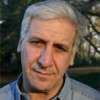
Edward Hirsch
Edward Hirschis an American poet and critic who wrote a national bestseller about reading poetry. He has published nine books of poems, including The Living Fire: New and Selected Poems, which brings together thirty-five years of work, and Gabriel: A Poem, a book-length elegy for his son that The New Yorker calls “a masterpiece of sorrow.” He has also published five prose books about poetry. He is president of the John Simon Guggenheim Memorial Foundation in New York City...
NationalityAmerican
ProfessionPoet
Date of Birth20 January 1950
CountryUnited States of America
You're trying to write about something that's sacred. You're trying to bring the seriousness of life and death to it, and you're trying to find a way to dramatize it, and you're trying to give language to it, which is inadequate. But it's important to try.
A novel takes place over time. It's a historical narrative, and it needs to have a series of peaks and valleys and the move through. You can't just start at the highest pitch and stay there, but you can in a lyric poem.
As far as I'm concerned, freedom is the most important thing to creativity. You should feel free to write in whatever way, whatever language, feels comfortable to you.
I love the leisurely amplitude, the spaciousness, of taking a walk, of heading somewhere, anywhere, on foot. I love the sheer adventure of it: setting out and taking off.
I had feelings that I didn't know what to do with, and I felt better when I started writing them. I thought of it as poetry. I did notice girls really liked it. Better than football. They liked the combination.
In every culture, in every language, there is expressive play, expressive word play; there's language use to different purposes that we would call poetry.
I didn't read poetry seriously until college, when I really began to devour it in a very intense way. I also discovered that a poet is a maker. Before that, I thought a poet was someone who wrote about his own experiences.
Daydreaming is one of the key sources of poetry - a poem often starts as a daydream that finds its way into language - and walking seems to bring a different sort of alertness, an associative kind of thinking, a drifting state of mind.
It's absolutely crucial to maintain my life as a poet.
It's very important to me to be an American poet, a Jewish poet, a poet who came of age in the 1960s.
Anyone who has lost a child will tell you that they don't recover their sense of endless possibility. Some people hide that well. But after a certain age, almost everyone is carrying something like that around, I suppose.
The commitment to working at poetry is important because a poet is a maker, and a poem is a made thing. We have to honor our feelings by working to transform them into something meaningful and lasting.
The idea that a poem was a made thing stayed with me, and I decided then that I wanted to be an artist, not just a diarist. So I put myself through a kind of apprenticeship in writing poetry, and I understood even then that my practice as a poet was deeply related to my reading.
The line is a way of framing poetry. All verse is measured by lines. The poetic line immediately announces its difference from everyday speech and prose.