Edward Teller
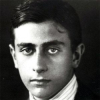
Edward Teller
Edward Tellerwas a Hungarian-American theoretical physicist who was born in Hungary, and is known colloquially as "the father of the hydrogen bomb", although he claimed he did not care for the title. He made numerous contributions to nuclear and molecular physics, spectroscopyand surface physics. His extension of Enrico Fermi's theory of beta decay, in the form of Gamow–Teller transitions, provided an important stepping stone in its application, while the Jahn–Teller effect and the Brunauer–Emmett–Tellertheory have retained their original formulation and...
NationalityAmerican
ProfessionEntrepreneur
Date of Birth15 January 1908
CityBudapest, Hungary
CountryUnited States of America
Today's science is tomorrow's technology.
Today, nothing is unusual about a scientific discovery's being followed soon after by a technical application: The discovery of electrons led to electronics; fission led to nuclear energy. But before the 1880's, science played almost no role in the advances of technology. For example, James Watt developed the first efficient steam engine long before science established the equivalence between mechanical heat and energy.
The science of today is the technology of tomorrow.
In a dangerous situation we have chosen the most dangerous of courses...we have chosen not to face our danger!
The eyes of childhood are magnifying lenses.
No, I'm the infamous Edward Teller.
If anyone wants a hole in the ground, nuclear explosives can make big holes
When Columbus took off, the purpose was to improve trade relations with China. That problem has not been solved to this very day, but just look at the by-products.
Knowing he [Bob Serber] was going to the [first atom bomb] test, I asked him how he planned to deal with the danger of rattlesnakes. He said, 'I'll take along a bottle of whiskey.' … I ended by asking, 'What would you do about those possibilities [of what unknown phenomena might cause a nuclear explosion to propagate in the atmosphere]?' Bob replied, 'Take a second bottle of whiskey.
There is no case where ignorance should be preferred to knowledge - especially if the knowledge is terrible.
In our educational institutions applied science may almost be described as a "no-man's land."
I tried to contribute to the defeat of the Soviets. If I contributed 1%, it is 1% of something enormous.
My experience has been in a short 77 years that in the end when you fight for a desperate cause and have good reasons to fight, you usually win.
The scientist is not responsible for the laws of nature. It is his job to find out how these laws operate. It is the scientist's job to find the ways in which these laws can serve the human will. However, it is not the scientist's job to determine whether a hydrogen bomb should be constructed, whether it should be used, or how it should be used. This responsibility rests with the American people and with their chosen representatives.