Eric Hoffer
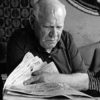
Eric Hoffer
Eric Hofferwas an American moral and social philosopher. He was the author of ten books and was awarded the Presidential Medal of Freedom in February 1983. His first book, The True Believer, was widely recognized as a classic, receiving critical acclaim from both scholars and laymen, although Hoffer believed that The Ordeal of Change was his finest work...
NationalityAmerican
ProfessionWriter
Date of Birth25 July 1902
CountryUnited States of America
change drastic equipped inherit learned learners longer themselves time
In a time of drastic change it is the learners who inherit the future. The learned usually find themselves equipped to live in a world that no longer exists.
change drastic equipped inherit learned learners longer themselves time
In a time of drastic change it is the learners who inherit the future. The learned usually find themselves equipped to live in a world that no longer exists.
hang mind onto
But I hang onto my prejudices, they are the testicles of my mind
against echo example eyes friends-or-friendship guard however image others ourselves reflection shape tend
However much we guard ourselves against it, we tend to shape ourselves in the image others have of us. It is not so much the example of others we imitate, as the reflection of ourselves in their eyes and the echo of ourselves in their words.
benevolent demands despot himself others people sees sheep shepherd
The benevolent despot who sees himself as a shepherd of the people still demands from others the submissiveness of sheep
breeds decency evil government human ill matter noble objective suspicion
No matter how noble the objective of a government, if it blurs decency and kindness, cheapens human life, and breeds ill will and suspicion - it is an evil government
attitude spring differences
...the differences between the conservative and the radical seem to spring mainly from their attitude toward the future. Fear of the future causes us to lean against and cling to the present, while faith in the future renders us receptive to change.
mean insatiable-hunger needs
The individual's most vital need is to prove his worth, and this usually means an insatiable hunger for action. For it is only the few who can acquire a sense of worth by developing and employing their capacities and talents. The majority prove their worth by keeping busy.
fear men self
Man staggers through life yapped at by his reason, pulled and shoved by his appetites, whispered to by fears, beckoned by hopes. Small wonder that what he craves most is self-forgetting.
selfish passion exercise
There is in even the most selfish passion a large element of self-abnegation. It is startling to realize that what we call extreme self-seeking is actually self-renunciation. The miser, health addict, glory chaser and their like are not far behind the selfless in the exercise of self-sacrifice.
reading profound detectives
There is no reason why the profoundest thoughts should not make easy and exciting reading. A profound thought is an exciting thing as exciting as a detective's deductions or hunches. The simpler the words in which a thought is expressed the more stimulating its effect.
dark self effort
It is apparently vital that we should be in the dark about ourselves not to be clear about our intentions, fears, and hopes. There is a stubborn effort in us to set up a compact screen between consciousness and the self.
thinking intellectual helping
By circumstance and perhaps also by inclination, I think in complete intellectual isolation. To expect others to help me think seems to me almost like expecting them to help me digest my food.
home past people
Ours is a golden age of minorities. At no time in the past have dissident minorities felt so much at home and had so much room to throw their weight around. They speak and act as if they were "the people," and what they abominate most is the dissent of the majority.