Eric Hoffer
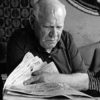
Eric Hoffer
Eric Hofferwas an American moral and social philosopher. He was the author of ten books and was awarded the Presidential Medal of Freedom in February 1983. His first book, The True Believer, was widely recognized as a classic, receiving critical acclaim from both scholars and laymen, although Hoffer believed that The Ordeal of Change was his finest work...
NationalityAmerican
ProfessionWriter
Date of Birth25 July 1902
CountryUnited States of America
attitude taken home
What the intellectual craves above all else is to be taken seriously, to be treated as a decisive force in shaping history. He is far more at home in a society that weighs his every word and keeps close watch on his attitudes then in a society that cares not what he says or does. He would rather be persecuted than ignored.
agency soul society
Words have ruined more souls than any devil's agency.
society holiness causes
The fanatic is not really a stickler to principle. He embraces a cause not primarily because of its justness or holiness but because of his desperate need for something to hold onto.
frustration self society
The ideal of self-advancement which the civilizing west offers to backward populations brings with it the plague of individual frustration. All the advantages brought by the West are ineffectual substitutes for the sheltering and soothing anonymity of communal existence.
opposites society together
Though they seem at opposite poles, fanatics of all kinds are actually crowded together at one end. It is the fanatic and the moderate who are poles apart and never meet.
doctors society disease
Quite often the social doctors become part of the disease.
mean sacrifice self
The vigor of a mass movement stems from the propensity of its followers for united action and self-sacrifice. When we ascribe the success of a movement to its faith, doctrine, propaganda, leadership, ruthlessness and so on, we are but referring to instruments of unification and to means used to inculcate a readiness for self-sacrifice. It is perhaps impossible to understand the nature of a mass movement unless it is recognized that their chief preoccupation is to foster, perfect and perpetuate a facility for united action and self-sacrifice.
society privilege reputation
One of the surprising privileges of intellectuals is that they are free to be scandalously asinine without harming their reputations.
originality protest deliberate
Originality is deliberate and forced, and partakes of the nature of a protest.
self-confidence frustration artist
Poverty when coupled with creativeness is usually free of frustration. This is true of the poor artisan skilled in his trade and of the poor writer, artist, and scientist in the full possession of creative powers. Nothing so bolsters our self-confidence and reconciles us with ourselves as the continuous ability to create; to see things grow and develop under our hand, day in, day out. The decline of handicrafts in modern times is perhaps one of the causes for the rise of frustration and the increased susceptibility of the individual to mass movements.
unawareness sensitivity
Lack of sensitivity is perhaps basically an unawareness of ourselves.
fashion numbers cowardice
When cowardice becomes a fashion its adherents are without number, and it masquerades as forbearance, reasonableness and whatnot.
acceptance diagnosis causes
To find the cause of our ills in something outside ourselves, something specific that can be spotted and eliminated, is a diagnosis that cannot fail to appeal. To say that the cause of our troubles is not in us but in the Jews , and pass immediately to the extermination of the Jews, is a prescription likely to find a wide acceptance.
men might strive
God alone is satisfied with what He is and can proclaim: "I am what I am." Unlike God, man strives with all his might to be what he is not. He incessantly proclaims: "I am what I am not.