Ernest Renan
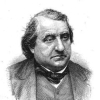
Ernest Renan
Joseph Ernest Renanwas a French expert of Middle East ancient languages and civilizations, philosopher, historian, and writer, devoted to his native province of Brittany. He is best known for his influential historical works on early Christianity, and his political theories, especially concerning nationalism and national identity. Renan is credited as being among the first scholars to advance the Khazar theory, which held that Ashkenazi Jews were descendants of Turkic peoples who had adopted Jewish religion and migrated to Western Europe...
NationalityFrench
ProfessionHistorian
Date of Birth28 February 1823
CountryFrance
To act well in this world, one must sacrifice all personal desires. The people who become missionaries of religious thought have no other Fatherland than this thought. Man is not on Earth merely to be happy, nor even simply to be honest. He is here to realize great things for humanity, to attain nobility, and to surmount the vulgarity of nearly every individual.
Muslims are the first victims of Islam. Many times I have observed in my travels in the Orient that fanaticism comes from a small number of dangerous men who maintain the others in the practice of religion by terror. To liberate the Muslim from his religion is the best service one can render him.
Our opinions become fixed at the point where we stop thinking.
Let us remember that sorrow alone is the creator of great things.
In morals, truth is but little prized when it is a mere sentiment, and only attains its full value when realized in the world as fact.
The only way of salvation for the world is by returning to thy allegiance.... Firm in my faith, I shall have force to withstand my evil counsellors, my skepticism, which leads me to doubt of the people, my restless spirit which, after truth has been brought to light, impels to go on searching for it...
When people complain of life, it is almost always because they have asked impossible things of it.
The talent of historians lies in their creating a true ensemble out of facts which are but half true.
History is as much an art as a science.
The greatest men of a nation are those it puts to death.
The man who obeys is nearly always better than the man who commands.
He whom God has touched will always be a being apart: he is, whatever he may do, a stranger among men; he is marked by a sign.