Ernst Junger
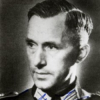
Ernst Junger
Ernst Jüngerwas a highly decorated German soldier and author who became famous for his World War I memoir Storm of Steel. The son of a successful businessman and chemist, Jünger rebelled against an affluent upbringing and sought adventure in the Wandervogel, before running away to briefly serve in the French Foreign Legion, an illegal act. Because he escaped prosecution in Germany due to his father's efforts, Jünger was able to enlist on the outbreak of war. During an ill-fated German...
NationalityGerman
ProfessionWriter
Date of Birth29 March 1895
CountryGermany
The anarch wages his own wars, even when marching in rank and file
It has always been my ideal in war to eliminate all feelings of hatred and to treat my enemy as an enemy only in battle and to honour him as a man according to his courage.
The anarch knows the rules. He has studied them as a historian and goes along with them as a contemporary. Wherever possible, he plays his own game within their framework; this makes the fewest waves.
A work of art wastes away and becomes lustreless in surroundings where it has a price but not a value. It radiates only when surrounded by love. It is bound to wilt in a world where the rich have no time and the cultivated no money. But it never harmonizes with borrowed greatness.
The partisan wants to change the law, the criminal break it; the anarch wants neither. He is not for or against the law. While not acknowledging the law, he does try to recognize it like the laws of nature, and he adjusts accordingly.
Habent sua fata libelli et balli [Books and bullets have their own destinies]
Although I am an anarch, I am not anti-authoritarian. Quite the opposite: I need authority, although I do not believe in it. My critical faculties are sharpened by the absence of the credibility that I ask for. As a historian, I know what can be offered.
Often I have the impression that I am writing on paper that is already browning in the licks of the flames.
Today only the person who no longer believes in a happy ending, only he who has consciously renounced it, is able to live. A happy century does not exist; but there are moments of happiness, and there is freedom in the moment.
I am an anarch – not because I despise authority, but because I need it. Likewise, I am not a nonbeliever, but a man who demands something worth believing in.
I came to realize that one single human being, comprehended in his depth, who gives generously from the treasures of his heart, bestows on us more riches than Caesar or Alexander could ever conquer. Here is our kingdom, the best of monarchies, the best republic. Here is our garden, our happiness.