Eudora Welty
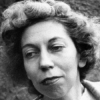
Eudora Welty
Eudora Alice Weltywas an American short story writer and novelist who wrote about the American South. Her novel The Optimist's Daughter won the Pulitzer Prize in 1973. Welty was awarded the Presidential Medal of Freedom, among numerous awards including the Order of the South. She was the first living author to have her works published by the Library of America. Her house in Jackson, Mississippi has been designated as a National Historic Landmark and is open to the public as...
NationalityAmerican
ProfessionNovelist
Date of Birth13 April 1909
CityJackson, MS
CountryUnited States of America
Radio, sewing machine, bookends, ironing board and that great big piano lamp - peace, that's what I like. Butterbean vines planted all along the front where the strings are.
I read library books as fast as I could go, rushing them home in the basket of my bicycle. From the minute I reached our house, I started to read. Every book I seized on, from “Bunny Brown and His Sister Sue at Camp Rest-a-While” to “Twenty Thousand Leagues Under the Sea,” stood for the devouring wish to read being instantly granted. I knew this was bliss, knew it at the time. Taste isn’t nearly so important; it comes in its own time.
To imagine yourself inside another person... is what a storywriter does in every piece of work; it is his first step, and his last too, I suppose.
I am a writer who came of a sheltered life. A sheltered life can be a daring life as well. For all serious daring starts from within.
I'm not very eloquent about things like this, but I think that writing and photography go together. I don't mean that they are related arts, because they're not. But the person doing it, I think, learns from both things about accuracy of the eye, about observation, and about sympathy toward what is in front of you... It's about honesty, or truth telling, and a way to find it in yourself, how to need it and learn from it.
Ah, I'm a woman that's been clear around the world in my rocking chair, and I tell you we all get surprises now and then.
Plots are ... what the writer sees with.
At the time of writing, I don't write for my friends or myself either; I write for it, for the pleasure of it.
I think that as you learn more about writing you learn to be direct.
Daydreaming had started me on the way; but story writing once I was truly in its grip, took me and shook me awake.
Reading Chekhov was just like the angels singing to me.
A story is not the same thing when it ends as it was when it began.
I had to grow up and learn to listen for the unspoken as well as the spoken-and to know a truth.
The first thing we see about a short story is its mystery. And in the best short stories, we return at the last to see mystery again