Felix Frankfurter
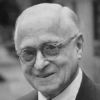
Felix Frankfurter
Felix Frankfurterwas a jurist, who served as an Associate Justice of the United States Supreme Court. Frankfurter was born in Vienna and immigrated to New York at the age of 12. He graduated from Harvard Law School and was active politically, helping to found the American Civil Liberties Union. He was a friend and adviser of President Franklin D. Roosevelt, who appointed him to the Supreme Court in 1939. Frankfurter served on the Supreme Court for 23 years, and was...
NationalityAmerican
ProfessionSupreme Court Justice
Date of Birth15 November 1882
CountryUnited States of America
For the highest exercise of judicial duty is to subordinate one's personal pulls and one's private views to the law of which we are all guaradians - those impersonal convictions that made a society a civilized community, and not the victims of personal rule.
The indispensible judicial requisite is intellectual humility.
If nowhere else, in the relation between Church and State, "good fences make good neighbors.
After all, advocates, including advocates for States, are like managers of pugilistic and election contestants, in that they have a propensity for claiming everything.
One who belongs to the most vilified and persecuted minority in history is not likely to be insensible to the freedoms guaranteed by our Constitution... But as judges we are neither Jew nor Gentile, neither Catholic nor agnostic.
To be effective, judicial administration must not be leaden-footed.
In the first place, lawyers better remember they are human beings, and a human being who hasn't his periods of doubts and distresses and disappointments must be a cabbage, not a human being. That is number one.
The eternal struggle in the law between constancy and change is largely a struggle between history and reason, between past reason and present needs.
What becomes decisive to a Justice's functioning on the Court in the large area within which his individuality moves is his general attitude toward law, the habits of the mind that he has formed or is capable of unforming, his capacity for detachment, his temperament or training for putting his passion behind his judgment instead of in front of it. The attitudes and qualities which I am groping to characterize are ingredients of what compendiously might be called dominating humility.
Time and experience have forcefully taught that the power to inspect dwelling places, either as a matter of systematic area-by-area search or, as here, to treat a specific problem, is of indispensable importance in the maintenance of community health; a power that would be greatly hobbled by the blanket requirement of the safeguards necessary for a search of evidence of criminal acts.
Democracy is always a beckoning goal, not a safe harbor. For freedom is an unremitting endeavor, never a final achievement.
Ours is an accusatorial and not an inquisitorial system -- a system in which the state must establish guilt by evidence independently and freely secured and may not by coercion prove its charge against an accused out of his own mouth.
While it is not always profitable to analogize fact to fiction, La Fontaine's fable of the crow, the cheese, and the fox demonstrates that there is a substantial difference between holding a piece of cheese in the beak and putting it in the stomach.
It is a fair summary of history to say that the safeguards of liberty have been forged in controversies involving not very nice people.