Felix Frankfurter
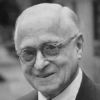
Felix Frankfurter
Felix Frankfurterwas a jurist, who served as an Associate Justice of the United States Supreme Court. Frankfurter was born in Vienna and immigrated to New York at the age of 12. He graduated from Harvard Law School and was active politically, helping to found the American Civil Liberties Union. He was a friend and adviser of President Franklin D. Roosevelt, who appointed him to the Supreme Court in 1939. Frankfurter served on the Supreme Court for 23 years, and was...
NationalityAmerican
ProfessionSupreme Court Justice
Date of Birth15 November 1882
CountryUnited States of America
Fragile as reason is and limited as law is as the institutionalized medium of reason, that's all we have standing between us and the tyranny of mere will and the cruelty of unbridled, undisciplined feeling
For the highest exercise of judicial duty is to subordinate one's personal pulls and one's private views to the law of which we are all guaradians - those impersonal convictions that made a society a civilized community, and not the victims of personal rule.
The eternal struggle in the law between constancy and change is largely a struggle between history and reason, between past reason and present needs.
Certainly the affirmative pursuit of one's convictions about the ultimate mystery of the universe and man's relation to it is placed beyond the reach of law. Government may not interfere with organized or individual expressions of belief or disbelief. Propagation of belief - or even of disbelief - in the supernatural is protected, whether in church or chapel, mosque or synagogue, tabernacle or meeting-house.
Fragile as reason is and limited as law is as the institutionalised medium of reason, that's all we have between us and the tyranny of mere will and the cruelty of unbridled, undisciplined feelings.
To some lawyers, all facts are created equal.
All our work, our whole life is a matter of semantics, because words are the tools with which we work, the material out of which laws are made, out of which the Constitution was written. Everything depends on our understanding of them.
Convictions following the admission into evidence of confessions which are involuntary, i.e., the product of coercion, either physical or psychological, cannot stand. This is so not because such confessions are unlikely to be true but because the methods used to extract them offend an underlying principle in the enforcement of our criminal law: that ours is an accusatorial and not an inquisitorial system a system in which the State must establish guilt by evidence independently and freely secured and may not by coercion prove its charges against an accused out of his own mouth.
It would be a narrow conception of jurisprudence to confine the notion of 'laws' to what is found written on the statute books, and to disregard the gloss which life has written upon it.
A license cannot be revoked because a man is redheaded or because he was divorced, except for a calling, if such there be, for which redheadedness or an unbroken marriage may have some rational bearing. If a State licensing agency lays bare its arbitrary action, or if the State law explicitly allows it to act arbitrarily, that is precisely the kind of State action which the Due Process Clause forbids.
If one man can be allowed to determine for himself what is law, every man can. That means first chaos, then tyranny. Legal process is an essential part of the democratic process.
I know of no title that I deem more honorable than that of Professor of the Harvard Law School.
Future lawyers should be more aware that law is not a system of abstract logic, but the web of arrangements, rooted in history but also in hopes, for promoting to a maximum the full use of a nation's resources and talents.
Congress is, after all, not a body of laymen unfamiliar with the commonplaces of our law. This legislation was the formulation of the two Judiciary Committees, all of whom are lawyers, and the Congress is predominately a lawyers' body.