Flannery O'Connor
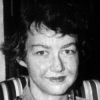
Flannery O'Connor
Mary Flannery O'Connorwas an American writer and essayist. An important voice in American literature, she wrote two novels and 32 short stories, as well as a number of reviews and commentaries. She was a Southern writer who often wrote in a Southern Gothic style and relied heavily on regional settings and grotesque characters. Her writing also reflected her own Roman Catholic faith and frequently examined questions of morality and ethics. Her posthumously-compiled Complete Stories won the 1972 U.S. National Book...
NationalityAmerican
ProfessionNovelist
Date of Birth25 March 1925
CitySavannah, GA
CountryUnited States of America
The less self-conscious you are about what you are about, the better in a way, that is to say technically. You have to get it in your blood, not in the head.
If you do the same thing every day at the same time for the same length of time, you'll save yourself from many a sink. Routine is a condition of survival.
Being a Georgia author is a rather specious dignity, on the same order as, for the pig, being a Talmadge ham.
It is always difficult to get across to people who are not professional writers that a talent to write does not mean a talent to write anything at all.
The novelist is required to open his eyes on the world around him and look. If what he sees is not highly edifying, he is still required to look. Then he is required to reproduce, with words, what he sees.
I don't think you should write something as long as a novel around anything that is not of the gravest concern to you and everybody else and for me this is always the conflict between an attraction for the Holy and the disbelief in it that we breathe in with the air of the times.
In my travels I am often asked if college stifles young writers. In my opinion, it doesn't stifle them enough.
The truth does not change according to our ability to stomach it emotionally. A higher paradox confounds emotion as well as reason and there are long periods in the lives of all of us, and of the saints, when the truth as revealed by faith is hideous, emotionally disturbing, downright repulsive. Witness the dark night of the soul in individual saints. Right now the whole world seems to be going through a dark night of the soul.
... Simone Weil is a mystery that should keep us all humble, and I need it more than most. Also she's the example of the religious consciousness without a religion which maybe sooner or later I will be able to write about.
On the subject of the feminist business, I just never think...of qualities which are specifically feminine or masculine. I suppose I divide people into two classes: the Irksome and the Non-Irksome without regard to sex. Yes and there are the Medium Irksome and the Rare Irksome.
I suppose half of writing is overcoming the revulsion you feel when you sit down to it.
... the main concern of the fiction writer is with mystery as it is incarnated in human life.
I am very much afraid that to the fiction writer the fact that we shall always have the poor with us is a source of satisfaction,for it means, essentially, that he will always be able to find someone like himself.
... the novelist is bound by the reasonable possibilities, not the probabilities, of his culture.