Francis Crick
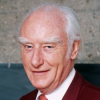
Francis Crick
Francis Harry Compton Crick OM FRSwas a British molecular biologist, biophysicist, and neuroscientist, most noted for being a co-discoverer of the structure of the DNA molecule in 1953 with James Watson. Together with Watson and Maurice Wilkins, he was jointly awarded the 1962 Nobel Prize in Physiology or Medicine "for their discoveries concerning the molecular structure of nucleic acids and its significance for information transfer in living material"...
NationalityEnglish
ProfessionScientist
Date of Birth8 June 1916
Francis Crick quotes about
men views brain
There is no scientific study more vital to man than the study of his own brain. Our entire view of the universe depends on it.
act certain chain english-scientist messenger secondary seems since single virtually
It seems virtually certain that a single chain of RNA can act as messenger RNA, since poly U is a single chain without secondary structure.
code determined english-scientist four genetic sequence twenty
The genetic code describes the way in which a sequence of twenty or more things is determined by a sequence of four things of a different type.
thinking class simplicity
For simplicity one can think of the + class as having one extra base at some point or other in the genetic message and the - class as having one too few.
thinking arrogance ruthlessness
Jim and I hit it off immediately, partly because our interests were astonishingly similar and partly, I suspect, because a certain youthful arrogance, a ruthlessness, an impatience with sloppy thinking can naturally to both of us.
children may taught
Christianity may be OK between consenting adults in private but should not be taught to young children.
lying trying may
To produce a really good biological theory one must try to see through the clutter produced by evolution to the basic mechanisms lying beneath them, realizing that they are likely to be overlaid by other, secondary mechanisms. What seems to physicists to be a hopelessly complicated process may have been what nature found simplest, because nature could only build on what was already there.
believe discovery might
When you start in science, you are brainwashed into believing how careful you must be, and how difficult it is to discover things. There's something that might be called the 'graduate student syndrome'; graduate students hardly believe they can make a discovery.