Frantz Fanon
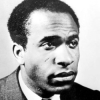
Frantz Fanon
Frantz Omar Fanonwas a Martinique-born Afro-Caribbean psychiatrist, philosopher, revolutionary, and writer whose works are influential in the fields of post-colonial studies, critical theory, and Marxism. As an intellectual, Fanon was a political radical, Pan-Africanist, and a Marxist humanist concerned with the psychopathology of colonization, and the human, social, and cultural consequences of decolonization...
NationalityFrench
ProfessionPhilosopher
Date of Birth20 July 1925
CountryFrance
O my body, make of me always a man who questions!
They realize at last that change does not mean reform, that change does not mean improvement.
The Church in the colonies is the white people's Church, the foreigner's Church. She does not call the native to God's ways but to the ways of the white man, of the master, of the oppressor.
And it is clear that in the colonial countries the peasants alone are revolutionary, for they have nothing to lose and everything to gain. The starving peasant, outside the class system is the first among the exploited to discover that only violence pays. For him there is no compromise, no possible coming to terms; colonization and decolonization a simply a question of relative strength.
It is the white man who creates the Negro. But it is the negro who creates negritude.
The living expression of the nation is the collective consciousness in motion of the entire people.
...There are too many idiots in this world. And having said it, I have the burden of proving it.
If the building of a bridge does not enrich the awareness of those who work on it, then the bridge ought not to be built.
The basic confrontation which seemed to be colonialism versus anti-colonialism, indeed capitalism versus socialism, is already losing its importance. What matters today, the issue which blocks the horizon, is the need for a redistribution of wealth. Humanity will have to address this question, no matter how devastating the consequences may be.
For a colonized people the most essential value, because the most concrete, is first and foremost the land: the land which will bring them bread and, above all, dignity.
He who is reluctant to recognize me opposes me.
Every colonized people-in other words, every people in whose soul an inferiority complex has been created by the death and burial of its local cultural originality-finds itself face to face with the language of the civilizing nation; that is, with the culture of the mother country. The colonized is elevated above his jungle status in proportion to his adoption of the mother country's cultural standards.
I came into this world anxious to uncover the meaning of things, my soul desirous to be at origin of the world, and here I am an object among other objects.
The gaze that the colonized subject casts at the colonist's sector is a look of lust, a look of envy. Dreams of possession. Every type of possession; of sitting at the colonist's table and sleeping in his bed, preferably with his wife. The colonized man is an envious man.