Franz Kafka
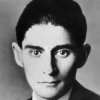
Franz Kafka
Franz Kafkawas a German-language writer of novels and short stories who is widely regarded as one of the major figures of 20th-century literature. His work, which fuses elements of realism and the fantastic, typically features isolated protagonists faced by bizarre or surrealistic predicaments and incomprehensible social-bureaucratic powers, and has been interpreted as exploring themes of alienation, existential anxiety, guilt, and absurdity. His best known works include "Die Verwandlung", Der Process, and Das Schloss. The term Kafkaesque has entered the English...
ProfessionNovelist
Date of Birth3 July 1883
CityPrague, Czech Republic
If what was supposed to have been destroyed in Paradise was destructible, then it was not decisive; but if it was indestructible, then we are living in a false belief.
Anybody who preserves the ability to recognize beauty will never get old.
I wanted to escape the unrest, to shut out the voices around me and within me, so I write.
There is a goal but no way; what we call the way is mere wavering.
Writing [is] a form of prayer.
This inescapable duty to observe oneself: if someone else is observing me, naturally I have to observe myself too; if none observe me, I have to observe myself all the closer.
The mediation by the serpent was necessary. Evil can seduce man, but cannot become man.
The Bible is a sanctum; the world, sputum.
My life was sweeter than other people's and my death will be more terrible by the same degree.
One reads in order to ask questions
There was once a community of scoundrels, that is to say, they were not scoundrels, but ordinary people.
Either the world is so tiny or we are enormous; in either case, we fill it completely.
Towards the avoidance of a piece of verbal confusion: What is intended to be actively destroyed must first of all have been firmly grasped; what crumbles away crumbles away, but cannot be destroyed.
To animalise is humane, to humanise is animal.