Frederick Douglass
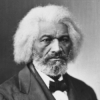
Frederick Douglass
Frederick Douglasswas an African-American social reformer, abolitionist, orator, writer, and statesman. After escaping from slavery in Maryland, he became a national leader of the abolitionist movement from Massachusetts and New York, gaining note for his dazzling oratory and incisive antislavery writings. In his time he was described by abolitionists as a living counter-example to slaveholders' arguments that slaves lacked the intellectual capacity to function as independent American citizens. Northerners at the time found it hard to believe that such a...
ProfessionAutobiographer
Date of Birth14 February 1818
CityTalbot County, MD
Liberty for all; chains for none.
Truth is proper and beautiful in all times and in all places.
From the first I saw no chance of bettering the condition of the freedman until he should cease to be merely a freedman and should become a citizen.
Slaves are generally expected to sing as well as to work.
Knowledge unfits a child to be a slave.
In all the relations of life and death, we are met by the color line.
In one point of view, we, the abolitionists and colored people, should meet [the Dred Scott] decision, unlooked for and monstrous as it appears, in a cheerful spirit. This very attempt to blot out forever the hopes of an enslaved people may be one necessary link in the chain of events preparatory to the downfall and complete overthrow of the whole slave system.
Power concedes nothing without demand. It never has and never will. Show me the exact amount of wrong and injustices that are visited upon a person and I will show you the exact amount of words endured by these people.
Slaves were expected to sing as well as to work. A silent slave was not liked, either by masters or overseers.
In this denial of the right to participate in government, not merely the degradation of woman and the perpetuation of a great injustice happens, but the maiming and repudiation of one-half of the moral and intellectual power of the government of the world.
Our community belongs to us and whether it is mean or majestic, whether arrayed in glory or covered in shame, we cannot but share its character and destiny.
Let us render the tyrant no aid.
To drag a man in fetters into the grand illuminated temple of liberty, and call upon him to join you in joyous anthems, were inhuman mockery and sacrilegious irony.
Though conscious of the difficulty of learning without a teacher, I set out with high hope, and a fixed purpose, at whatever cost of trouble, to learn how to read.