Friedrich August von Hayek
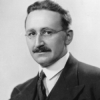
Friedrich August von Hayek
Friedrich Hayek CH, born in Austria-Hungary as Friedrich August von Hayek and frequently referred to as F. A. Hayek, was an Austrian and British economist and philosopher best known for his defense of classical liberalism. Hayek shared the 1974 Nobel Memorial Prize in Economic Sciences with Gunnar Myrdal for his "pioneering work in the theory of money and economic fluctuations and ... penetrating analysis of the interdependence of economic, social and institutional phenomena."...
NationalityAustrian
ProfessionEconomist
Date of Birth8 May 1899
CountryAustria
Friedrich August von Hayek quotes about
It is not the source but the limitation of power which prevents it from being arbitrary.
..where effective competition can be created, it is a better way of guiding individual efforts than any other... regards competition as superior not only because it is in most circumstances the most efficient method known but even more because it is the only method by which our activities can be adjusted to each other without coercive or arbitrary intervention of authority.
The credit which the apparent conformity with recognized scientific standards can gain for seemingly simple but false theories may, as the present instance shows, have grave consequences.
It may be that a free society... carries in itself the forces of its own destruction, that once freedom has been achieved it is taken for granted and ceases to be valued, and that the free growth of ideas which is the essence of a free society will bring about the destruction of the foundations on which it depends.
We must not forget that … monetary policy all over the world has followed the advice of the stabilizers. It is high time that their influence, which has already done harm enough, should be overthrown.
We know: of course, with regard to the market and similar social structures, a great many facts which we cannot measure and on which indeed we have only some very imprecise and general information.
It is one of the most fatal illusions that, by substituting negotiations between states or organized groups for competition for markets or for raw materials, international friction would be reduced. This would merely put a contest of force in the place of what can only metaphorically be called the "struggle" of competition and would transfer to powerful and armed states, subject to no superior law, the rivalries which between individuals had to be decided without recourse to force.
If we were to make no better use of victory than to countenance existing trends in this direction, only too visible before 1939, we might indeed find that we have defeated National Socialism merely to create a world of many national socialisms, differing in detail, but all equally totalitarian, nationalistic, and in recurrent conflict with each other.
When we ask what ought to be the relative remunerations of a nurse or a butcher, or a coal miner and a judge at a high court, of the deep sea diver of the cleaner of sewers, of the organiser of a new industry and a jockey, of the inspector of taxes and the inventor of a life-saving drug, of the jet-pilot or the professor of mathematics, the appeal to 'social justice' does not give us the slightest help in deciding...
The task of the political philosopher can only be to influence public opinion, not to organize people for action. He will do so effectively only if he is not concerned with what is now politically possible but consistently defends the "general principles which are always the same." In this sense I doubt whether there can be such a thing as a conservative political philosophy. Conservatism may often be a useful practical maxim, but it does not give us any guiding principles which can influence long-range developments.
The problems raised by a conscious direction of economic affairs on a national scale inevitably assume even greater dimensions when the same is attempted internationally. The conflict between planning and freedom cannot but become more serious as the similarity of standards and values among those submitted to a unitary plan diminishes.
It is no accident that on the whole there was more beauty and decency to be found in the life of the small peoples, and that among the large ones there was more happiness and content in proportion as they had avoided the deadly blight of centralization.
Whenever it is necessary that one of several conflicting opinions should prevail and when one would have to be made to prevail by force if need be, it is less wasteful to determine which has the stronger support by counting numbers than by fighting.
We can either have a free Parliament or a free people. Personal freedom requires that all authority is restrained by long-run principles which the opinion of the people approves.