Gabriel Marcel
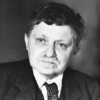
Gabriel Marcel
Gabriel Honoré Marcelwas a French philosopher, playwright, music critic and leading Christian existentialist. The author of over a dozen books and at least thirty plays, Marcel's work focused on the modern individual's struggle in a technologically dehumanizing society. Though often regarded as the first French existentialist, he dissociated himself from figures such as Jean-Paul Sartre, preferring the term 'Philosophy of Existence' to define his own thought. The Mystery of Being is a well-known two-volume work authored by Marcel...
NationalityFrench
ProfessionPhilosopher
Date of Birth7 December 1889
CountryFrance
Gabriel Marcel quotes about
Hope consists in asserting that there is at the heart of being, beyond all data, beyond all inventories and all calculations, a mysterious principle which is in connivance with me
It is right that we be concerned with the scientific probity of metaphysics.
But a science is exact to the extent that its method measures up to and is adequate to its object.
Metaphysics is a science.
Contemplation and wisdom are highest achievements and man is not totally at home with them.
This detachment (poverty, chastity, etc.) must not be mere amputation; everything which is shaken off must be simultaneously found again at a higher level.
The wise man knows how to run his life so that contemplation is possible.
I not only have a body; I am this body.
An individual is not distinct from his place. He is his place.
... freedom is a conquest, always partial, always precarious, always challenged. ... the freest person is the one with the most hope.
But however measurable, there is much more life in music than mathematics or logic ever dreamed of.
A mystery is a problem that encroaches upon itself because the questioner becomes the object of the question. Getting to Mars is a problem. Falling in love is a mystery.
The dynamic element in my philosophy, taken as a whole, can be seen as an obstinate and untiring battle against the spirit of abstraction.
Being and having in our society teaches us how to take possession of things, when it should rather initiate us in the art of letting go. For there is neither freedom nor real life without an apprenticeship in letting go.