Gaston Bachelard
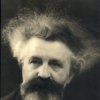
Gaston Bachelard
Gaston Bachelardwas a French philosopher. He made contributions in the fields of poetics and the philosophy of science. To the latter he introduced the concepts of epistemological obstacle and epistemological break. He influenced many subsequent French philosophers, among them Michel Foucault, Louis Althusser, Dominique Lecourt and Jacques Derrida, as well as the sociologist Pierre Bourdieu...
NationalityFrench
ProfessionPhilosopher
Date of Birth27 June 1884
CountryFrance
description subjects objects
Empirical description involves enslavement to the object by decreeing passivity on the part of the subject.
destinies future opens poetic poetry
Poetry is one of the destinies of speech. . . . One would say that the poetic image, in its newness, opens a future to language.
childhood germs excess
An excess of childhood is the germ of a poem.
quality term expressive
Any comparison diminishes the expressive qualities of the terms of the comparison.
teach cease
He who ceases to learn cannot adequately teach.
fire fields rich
At all times and in all fields the explanation by fire is a rich explanation.
dream owning-a-home house
The house protects the dreamer, the house allows one to dream in peace
dream house steps
To go upstairs in the word house is to withdraw step by step; while to go down to the cellar is to dream
dream drama writing
In order to dream so far, is it enough to read? Isn't it necessary to write? Write as in our schoolboy past, in those days when, as Bonnoure says, the letters wrote themselves one by one, either in their gibbosity or else in their pretentious elegance? In those days, spelling was a drama, our drama of culture at work in the interior of a word.
dream inspiration profound
Here we are at the very core of the thesis we wish to defend in the present essay: reverie is under the sign of the anima. When the reverie is truly profound, the being who comes to dream within us is our anima. For a philosopher who takes his inspiration from phenomenology, a reverie on reverie is very exactly a phenomenology of the anima, and it is by coordinating reveries on reverie that he hopes to constitute a "Poetics of reverie". In other words, the poetics of reverie is a poetics of the anima.
dream memories taken
Nothing is forgotten in the processes of idealization. Reveries of idealization develop, not by letting oneself be taken in by memories, but by constantly dreaming the values of a being whom one would love. And that is the way a great dreamer dreams his double. His magnified double sustains him.
memories book simple
Whoever lives for poetry must read everything. How often has the light of a new idea sprung for me from a simple brochure! When one allows himself to be animated by new images, he discovers iridescence in the images of old books. Poetic ages unite in a living memory. The new age awakens the old. The old age comes to live again in the new. Poetry is never as unified as when it diversifies.
men imagination faces
For in the end, the irreality function functions as well in the face of man as in the face of the cosmos. What would we know of others if we did not imagine things?
dream order want
It is quite evident that a barrier must be cleared in order to escape the psychologists and enter into a realm which is not "auto-observant", where we ourselves no longer divide ourselves into observer and observed. Then the dreamer is completely dissolved in his reverie. His reverie is his silent life. It is that silent peace which the poet wants to convey to us.