Georg C. Lichtenberg
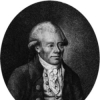
Georg C. Lichtenberg
Georg Christoph Lichtenbergwas a German scientist, satirist, and Anglophile. As a scientist, he was the first to hold a professorship explicitly dedicated to experimental physics in Germany. Today, he is remembered for his posthumously published notebooks, which he himself called Sudelbücher, a description modelled on the English bookkeeping term "scrapbooks", and for his discovery of the strange tree-like electrical discharge patterns now called Lichtenberg figures...
NationalityGerman
ProfessionScientist
Date of Birth1 July 1742
CountryGermany
Do not take too artificial a view of mankind but judge them from a natural standpoint, deeming them neither over good nor over bad.
The rules of grammar are mere human statutes, which is why when he speaks out of the possessed the Devil himself speaks bad Latin.
One of our forefathers must have read a forbidden book.
Diogenes, filthily attired, paced across the splendid carpets in Plato's dwelling. Thus, said he, do I trample on the pride of Plato. Yes, Plato replied, but only with another kind of pride.
Ask yourself always: how can this be done better?
Perhaps pure reason without heart would never have thought of God.
Everyone is perfectly willing to learn from unpleasant experience - if only the damage of the first lesson could be repaired.
Great men too make mistakes, and many among them do it so often that one is almost tempted to call them little men.
God, who winds up our sundials ...
After all, is our idea of God anything more than personified incomprehensibility?
To read means to borrow; to create out of one s readings is paying off one's debts.
The celebrated painter Gainsborough got as much pleasure from seeing violins as from hearing them.
There were honest people long before there were Christians and there are, God be praised, still honest people where there are no Christians. It could therefore easily be possible that people are Christians because true Christianity corresponds to what they would have been even if Christianity did not exist.
A writer who wishes to be read by posterity must not be averse to putting hints which might give rise to whole books, or ideas for learned discussions, in some corner of a chapter so that one should think he can afford to throw them away by the thousand.