George P. Shultz
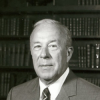
George P. Shultz
George Pratt Shultzis an American economist, statesman, and businessman. He served as the United States Secretary of Labor from 1969 to 1970, as the director of the Office of Management and Budget from 1970 to 1972, as the U.S. Secretary of the Treasury from 1972 to 1974, and as the U.S. Secretary of State from 1982 to 1989. Before entering politics, he was professor of economics at MIT and the University of Chicago, serving as Dean of the University of...
NationalityAmerican
ProfessionPublic Servant
Date of Birth13 December 1920
CountryUnited States of America
I like the life of ideas and applying ideas to action.
If they are too big to fail, make them smaller.
Oh, you know. I am secretary of state. My trips aren't successful. I just talk to people.
There is no prospect that the United States will say to Israel, 'You do such and such and we'll not support you in your security.
You don't get gushers of revenue by raising tax rates. You get it through expansion.
We have struggled with terrorism for a long time. In the Reagan administration, I was a hawk on the subject. I said terrorism is a big problem, a different problem, and we have to take forceful action against it. Fortunately, Ronald Reagan agreed with me, but not many others did.
The civilized world has a common stake in defeating the terrorists.
World Affairs Councils are great organizations. They help keep people throughout our country alive to important developments in world affairs and underscore that, in the country, we stay engaged and we are part of the world.
Ideas matter a lot, the underlying ideas that stand behind policies. When you don't have ideas, your policies are flip-flopping all over the place. When you do have ideas, you have more consistency. And when you have the right ideas - then you can get somewhere (reagan had the right ideas).
You've got to dream a little bit if you're going to get somewhere.
I learned in business that you had to be very careful when you told somebody that's working for you to do something, because the chances were very high he'd do it. In government, you don't have to worry about that.
Negotiations are a euphemism for capitulation if the shadow of power is not cast across the bargaining table.
He who walks in the middle of the road gets hit from both sides.
The minute you start talking about what you're going to do if you lose, you have lost.