Giuseppe Mazzini
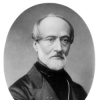
Giuseppe Mazzini
Giuseppe Mazziniwas an Italian politician, journalist and activist for the unification of Italy and spearheaded the Italian revolutionary movement. His efforts helped bring about the independent and unified Italy in place of the several separate states, many dominated by foreign powers, that existed until the 19th century. He also helped define the modern European movement for popular democracy in a republican state...
NationalityItalian
ProfessionPolitician
Date of Birth22 June 1805
CountryItaly
Great revolutions are the work rather of principles than of bayonets, and are achieved first in the moral, and afterwards in the material sphere.
O my Brothers! love your Country. Our Country is our home, the home which God has given us, placing therein a numerous family which we love and are loved by, and with which we have a more intimate and quicker communion of feeling and thought than with others; a family which by its concentration upon a given spot, and by the homogeneous nature of its elements, is destined for a special kind of activity.
Without Country you have neither name, token, voice, nor rights, no admission as brothers into the fellowship of the Peoples.
Love and respect woman. Look to her not only for comfort, but for strength and inspiration and the doubling of your intellectual and moral powers. Blot out from your mind any idea of superiority; you have none.
A Country is not a mere territory; the particular territory is only its foundation. The Country is the idea which rises upon that foundation; it is the sentiment of love, the sense of fellowship which binds together all the sons of that territory.
Love your country. Your country is the land where your parents sleep, where is spoken that language in which the chosen of your heart, blushing, whispered the first word of love; it is the home that God has given you that by striving to perfect yourselves therein you may prepare to ascend to him.
Ideas grow quickly when watered with the blood of martyrs.
Art does not imitate, but interpret.
Every Age has its own peculiar faith. Any attempt to translate into facts the mission of one Age with the machinery of another, can only end in an indefinite series of abortive efforts. Defeated by the utter want of proportion between the means and the end, such attempts might produce martyrs, but never lead to victory.
Art does not imitate, but interpret. It searches out the idea lying dormant in the symbol, in order to present the symbol to men in such form as to enable them to penetrate through it to the idea. Were it otherwise, what would be the use or value of art?
God has given you your country as cradle, and humanity as mother; you cannot rightly love your brethren of the cradle if you love not the common mother.