Gregory Bateson
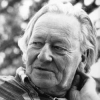
Gregory Bateson
Gregory Batesonwas an English anthropologist, social scientist, linguist, visual anthropologist, semiotician, and cyberneticist whose work intersected that of many other fields. In the 1940s he helped extend systems theory and cybernetics to the social and behavioral sciences. He spent the last decade of his life developing a "meta-science" of epistemology to bring together the various early forms of systems theory developing in different fields of science. His writings include Steps to an Ecology of Mindand Mind and Nature. Angels Fearwas...
NationalityBritish
ProfessionScientist
Date of Birth9 May 1904
If we pursue this matter further, we shall be told that the stable object is unchanging under the impact or stress of some particular external or internal variable or, perhaps, that it resists the passage of time.
Rather, for all objects and experiences, there is a quantity that has optimum value. Above that quantity, the variable becomes toxic. To fall below that value is to be deprived.
From the point of view of any agent who imposes a quantitative change, any change of pattern which may occur will be unpredictable or divergent.
Of all these examples, the simplest but the most profound is the fact that it takes at least two somethings to create a difference.
The processes of perception are inaccessible; only the products are conscious and, of course, it is the products that are necessary.
A major difficulty is that the answer to the Riddle of the Sphinx is partly a product of the answers that we already have given to the riddle in its various forms.
Logic can often be reversed, but the effect does not precede the cause.
It is impossible, in principle, to explain any pattern by invoking a single quantity.
Logic is a poor model of cause and effect.
Whenever we pride ourselves upon finding a newer, stricter way of thought or exposition … we lose something of the ability to think new thoughts. And equally, of course, whenever we rebel against the sterile rigidity of formal thought and exposition and let our ideas run wild, we likewise lose. As I see it, the advances in scientific thought come from a combination of lose and strict thinking, and this combination is the most precious tool of science.
It is to the Riddle of the Sphinx that I have devoted fifty years of professional life as an anthropologist.
We do not know enough about how the present will lead into the future. We shall never be able to say, "Ha! My perception, my accounting for that series, will indeed cover its next and future components," or "Next time I meet with these phenomena, I shall be able to predict their total course.
Prediction can never be absolutely valid and therefore science can never prove some generalization or even test a single descriptive statement and in that way arrive at final truth.
Schizophrenia --its nature, etiology, and the kind of therapy to use for it--remains one of the most puzzling of the mental illnesses. The theory of schizophrenia presented here is based on communications analysis, and specifically on the Theory of Logical Types. From this theory and from observations of schizophrenic patients is derived a description, and the necessary conditions for, a situation called the "double bind"--a situation in which no matter what a person does, he "can't win." It is hypothesized that a person caught in the double bind may develop schizophrenic symptoms