Gustave Flaubert
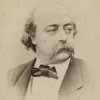
Gustave Flaubert
Gustave Flaubertwas an influential French novelist who was perhaps the leading exponent of literary realism in his country. He is known especially for his first published novel, Madame Bovary, for his Correspondence, and for his scrupulous devotion to his style and aesthetics. The celebrated short story writer Guy de Maupassant was a protégé of Flaubert...
NationalityFrench
ProfessionNovelist
Date of Birth12 December 1821
CityRouen, France
CountryFrance
The artist ought no more to appear in his work than God in nature.
The artist must be in his work like God in his Creation, invisible and all-powerful, so that he is felt everywhere but not seen.
Artists who seek perfection in everything are those who cannot attain it in anything.
If you participate in life, you don’t see it clearly: you suffer from it too much or enjoy it too much. The artist, to my way of thinking, is a monstrosity, something outside nature. All the misfortunes Providence inflicts on him come from his stubborness in denying that maxim.
Caught up in life, you see it badly. You suffer from it or enjoy it too much. The artist, in my opinion, is a monstrosity, something outside of nature.
[The artist] is like a pump; he has inside him a great pipe that reaches down into the entrails of things, the deepest layers. He sucks up what was lying there below, dim and unnoticed, and brings it in great jets to the sunlight.
Everything is there: the love of Art.
Reveal art; conceal the artist.
The artist must be in his work as God is in creation, invisible and all-powerful; one must sense him everywhere but never see him.
Judge the goodness of a book by the energy of the punches it has given you. . . I believe the greatest characteristic of genius, is, above all, force.
All one's inventions are true, you can be sure of that. Poetry is as exact a science as geometry.
Language is a cracked kettle on which we beat out tunes for bears to dance to, while all the time we long to move the stars to pity.
. . . human speech is like a cracked tin kettle, on which we hammer out tunes to make bears dance when we long to move the stars.
Human speech is like a cracked cauldron on which we bang out tunes that make bears dance, when what we want is to move the stars to pity