Harold Bloom
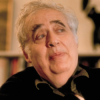
Harold Bloom
Harold Bloomis an American literary critic and Sterling Professor of Humanities at Yale University. Since the publication of his first book in 1959, Bloom has written more than 20 books of literary criticism, several books discussing religion, and a novel. He has edited hundreds of anthologies concerning numerous literary and philosophical figures for the Chelsea House publishing firm. Bloom's books have been translated into more than 40 languages...
NationalityAmerican
ProfessionTeacher
Date of Birth11 July 1930
CountryUnited States of America
A superb and dreadfully moving account of the glory and subsequent murder by the Romanians of the Jewish city in Odessa. . . . Odessa is both celebration and lament and equally impressive as both.
If we read the Western Canon in order to form our social, political, or personal moral values, I firmly believe we will become monsters of selfishness and exploitation.
I have read all of Daniel Aaron's books, and admired them, but in The Americanist I believe he has composed an intellectual and social memoir for which he will be remembered. His self-portrait is marked by personal tact and admirable restraint: he is and is not its subject. The Americanist is a vision of otherness: literary and academic friends and acquaintances, here and abroad. Eloquently phrased and free of nostalgia, it catches a lost world that yet engendered much of our own.
Rebecca Mead's My Life in Middlemarch is a wise, humane, and delightful study of what some regard as the best novel in English. Mead has discovered an original and highly personal way to make herself an inhabitant both of the book and of George Eliot's imaginary city. Though I have read and taught the book these many years I find myself desiring to go back to it after reading Rebecca Mead's work.
What is literary tradition? What is a classic? What is a canonical view of tradition? How are canons of accepted classics formed,and how are they unformed? I think that all these quite traditional questions can take one simplistic but still dialectical question as their summing up: do we choose tradition or does it choose us, and why is it necessary that a choosing take place, or a being chosen? What happens if one tries to write, or to teach, or to think, or even to read without the sense of a tradition? Why, nothing at all happens, just nothing.
The very best of all Merwin: I have been reading William since 1952, and always with joy.
To be a poet did not occur to me. It was indeed a threshold guarded by demons.
Unless you have read and absorbed the best that can be read and absorbed, you will not think clearly or well.
The world does not get to be a better or a worse place; it just gets more senescent.
Sometimes one succeeds, sometimes one fails.
The second, and I think this is the much more overt and I think it is the main cause, I have been increasingly demonstrating or trying to demonstrate that every possible stance a critic, a scholar, a teacher can take towards a poem is itself inevitably and necessarily poetic.
One measures oncoming old age by its deepening of Proust, and its deepening by Proust. How to read a novel? Lovingly, if it shows itself capable of accomodating one's love; and jealously, because it can become the image of one's limitations in time and space, and yet can give the Proustian blessing of more life.
No one yet has managed to be post-Shakespearean.
You know, I don't want to be offensive. But 'Infinite Jest' [regarded by many as Wallace's masterpiece] is just awful. It seems ridiculous to have to say it. He can't think, he can't write. There's no discernible talent.