Harold E. Varmus
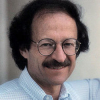
Harold E. Varmus
Harold Eliot Varmusis an American Nobel Prize-winning scientist and was the 14th Director of the National Cancer Institute, a post to which he was appointed by President Barack Obama. He was a co-recipientof the 1989 Nobel Prize in Physiology or Medicine for discovery of the cellular origin of retroviral oncogenes. He is currently the Lewis Thomas University Professor of Medicine at Weill Cornell Medicine and a Senior Associate at the New York Genome Center...
NationalityAmerican
ProfessionScientist
Date of Birth18 December 1939
CountryUnited States of America
From some dilatory reading in the early 1960s, I knew enough about viruses and their association with tumors in animals to understand that they might provide a relatively simple entry into a problem as complex as cancer.
When high school students ask to spend their afternoons and weekends in my laboratory, I am amazed: I didn't develop that kind of enthusiasm for science until I was 28 years old.
The public schools I attended were dominated by athletics and rarely inspiring intellectually, but I enjoyed a small circle of interesting friends despite my ineptitude at team sports and my preference for reading.
When I read about genetics, I see breakthroughs every day. And while I'm trying to learn more about behavioral science, I must say that I don't feel I get tremendous intellectual stimulation from most of the things I read.
I keep encouraging the pharmaceutical companies to put more money into R&D.
There are three great themes in science in the twentieth century : the atom, the computer, and the gene.
Every cancer looks different. Every cancer has similarities to other cancers. And were trying to milk those differences and similarities to do a better job of predicting how things are going to work out and making new drugs.
I begin with the premise that behavior is an incredibly important element in medicine. Peoples habits, their willingness to quit smoking, their willingness to take steps to avoid transmission of HIV, are all behavioral questions.
Tobacco, UV rays, viruses, heredity, and age are the main causes of cancer.
Following graduation from Amherst, a Woodrow Wilson Fellowship enabled me to test the depth of my interest in literary scholarship by beginning graduate studies at Harvard University.
I had learned that science is a rewarding, active process of discovery, not the passive absorption of what others had discovered.
All basic scientists who look to the NCI for funding should know that I will tolerate no retreat on the study of model systems and the pursuit of fundamental biological principles.
Our biggest single theme is trying to make the NIH work better with the same amount of money.
In general, all cancers have been traditionally characterized by the way they appear under the microscope and the organs in which they arise.