Havelock Ellis
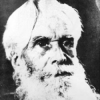
Havelock Ellis
Henry Havelock Ellis, known as Havelock Ellis, was an English physician, writer, progressive intellectual and social reformer who studied human sexuality. He was co-author of the first medical textbook in English on homosexuality in 1897, and also published works on a variety of sexual practices and inclinations, as well as transgender psychology. He is credited with introducing the notions of narcissism and autoeroticism, later adopted by psychoanalysis. He served as president of the Galton Institute and, like many intellectuals of...
NationalityBritish
ProfessionPsychologist
Date of Birth2 February 1859
To be a leader of men one must turn one's back on men.
It is curious how there seems to be an instinctive disgust in Man for his nearest ancestors and relations. If only Darwin could conscientiously have traced man back to the Elephant or the Lion or the Antelope, how much ridicule and prejudice would have been spared to the doctrine of Evolution.
Charm" — which means the power to effect work without employing brute force — is indispensable to women. Charm is a woman's strength just as strength is a man's charm.
Every man of genius sees the world at a different angle from his fellows, and there is his tragedy.
Failing to find in women exactly the same kind of sexual emotions, as they find in themselves, men have concluded that there are none there at all.
The greatest task before civilization at present is to make machines what they ought to be, the slaves, instead of the masters of men.
The omnipresent process of sex, as it is woven into the whole texture of our man's or woman's body, is the pattern of all the process of our life.
If men and women are to understand each other, to enter into each other's nature with mutual sympathy, and to become capable of genuine comradeship, the foundation must be laid in youth.
It is only the great men who are truly obscene. If they had not dared to be obscene, they could never have dared to be great.
A man must not swallow more beliefs than he can digest.
Charm is a woman's strength just as strength is a man's charm.
There can be no sexual love without lust; but, on the other hand, until the currents of lust in the organism have been irradiatedas to affect other parts of the psychic organism--at the least the affections and the social feelings--it is not yet sexual love. Lust, the specific sexual impulse, is indeed the primary and essential element in this synthesis, for it alone is adequate to the end of reproduction, not only in animals but in men. But it is not until lust is expanded and irradiated that it develops into the exquisite and enthralling flower of love.
The sexual regions constitute a particularly vulnerable spot, and remain so even in man, and the need for their protection which thus exists conflicts with the prominent display required for sexual allurement. This end is far more effectively attained, with greater advantage and less disadvantage, by concentrating the chief ensigns of sexual attractiveness on the upper and more conspicuous parts of the body. This method is well-nigh universal among animals as well as in man.
Man lives by imagination.